
Camping in Africa: 11 Tips and Your Questions Answered for 2025
Does a camping experience in Africa sound like a dream come true?
It always has been for me, and it’s a dream I’ve lived out 6 different times – so far. I’ve camped out on safari for anywhere from 3 nights at a time to 21 nights, and it’s never long enough!
Camping in Africa has to be one of the best, most exciting trips I’ve ever taken. Any kind of safari in Africa is unforgettable, but camping out just can’t be beat.
Lying in a tent at night, or even better, sleeping under the stars is an amazing experience. This is my first choice when it comes to safari, and I’ve slept in many tents in Africa over the years.
While drifting off to sleep, I’ve heard the grunt of hippos in a nearby lake, and the hooping giggle of hyenas. I’ve woken up in the morning to the elephant footprints throughout the camp, even though I didn’t hear them walk through.
And there’s nothing like feeling the ground tremble a little bit when a lion roars in the distance. If this is the sort of trip you dream about, you’re in the right place.
Read on for helpful tips and information that will help you make your dream of camping Africa come true!


Africa Camping
If you have questions about camping in the bush and want to know what to expect, keep reading.
1. The Different Ways to Go Camping in Africa
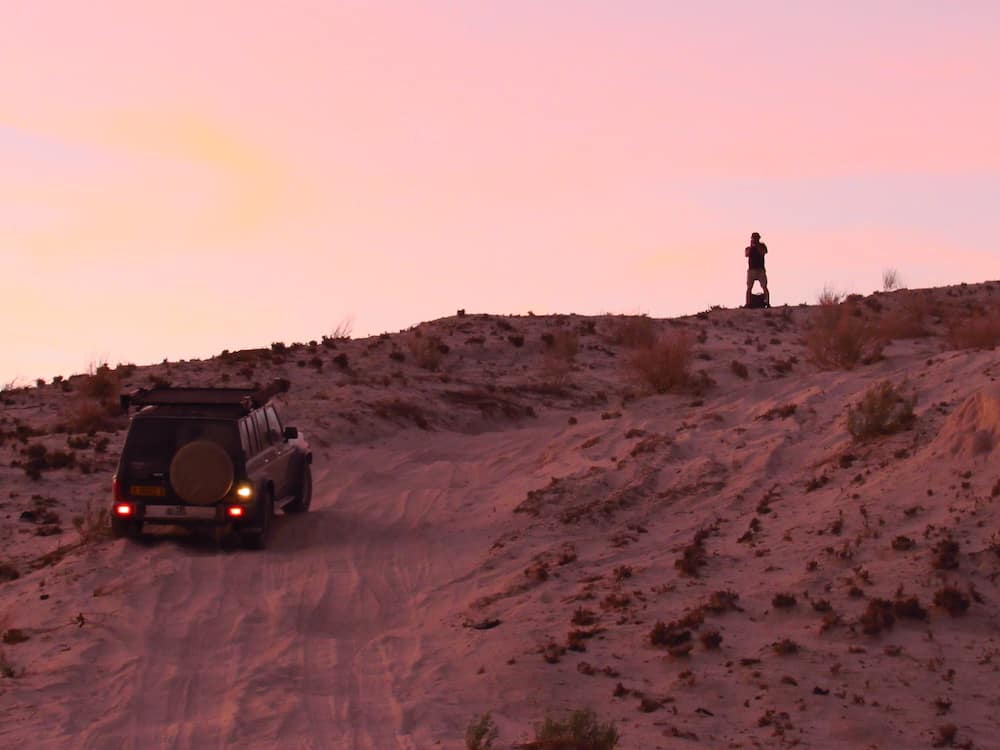
There are places in Africa where renting a vehicle and driving yourself through the bush can be an epic experience. You can wild camp, or camp in designated campgrounds.
This gives you the freedom to schedule your days how you’d like. It does involve some work, of course. You’ll need to organize your food, water, transportation, and accommodations.
You can tent on the ground or sleep in a rooftop tent on top of your vehicle. I prefer tenting on the ground myself, but a rooftop tent can give you a better view of the area.
If you’re a bit nervous, this might be a more comfortable option for you, too.
You will still have to follow certain rules when you’re camping wild, or independently, depending on where you’re camping. Still, it’s a great way to really feel a part of Africa.
However, there are many reasons that you might prefer an organized camping safari:
- You’re new to Africa, or camping, and aren’t comfortable going out on your own.
- You don’t want to go through the hassle of renting a vehicle, arranging supplies, etc.
- You don’t want to drive, navigate, build a fire, and cook for yourself!
- You enjoy meeting other travellers.
These are all very valid reasons to explore the option of an organized camping safari.
Organized camping tours in Africa are a great way to get your feet wet. Especially if you’re concerned about the safety of camping in Africa.
You will learn from the expert guides what the do’s and don’ts are of camping in Africa.
It’s also great practice if you’re planning your first self-drive safari and will be camping. An organized trip, even for just a few days, can give you some easy ideas on how to manage on your own.
You can find your bearings and get a few pointers. Then you’ll be ready to venture out on your own with confidence.
If you’re thinking about taking your first camping trip in Africa, you probably have a lot of questions. I hope to answer many of those here.
If you have others, feel free to contact me, and I’ll do my best to answer them.
2. Is Camping in Africa Safe?
Camping safaris carry certain risks, as does camping anywhere. However, it’s done safely by thousands of people every year, including me.
You can enjoy a safe camping trip in Africa by respecting the wild animals and following what are mostly common sense guidelines.
This is an important reason that I recommend going on an organized African camping trip before you jump into independent camping in Africa. It’s a great opportunity to learn the safety guidelines from guides who know and respect the bush.
Animal attacks are very rare in Africa. If you do hear of one, chances are high that the cause was human error.
3. Tent Camping Safely in Africa
Camping in Africa is quite safe, but again, this is a matter of following safety guidelines. Most importantly, if you’re on an organized African camping safari, listen to your guide’s safety instructions. And remember:
- It’s important not to have any food in your Africa safari tent that an animal might smell and decide to investigate. Animals won’t actually see your tent as a potential source of food unless they actually smell food.
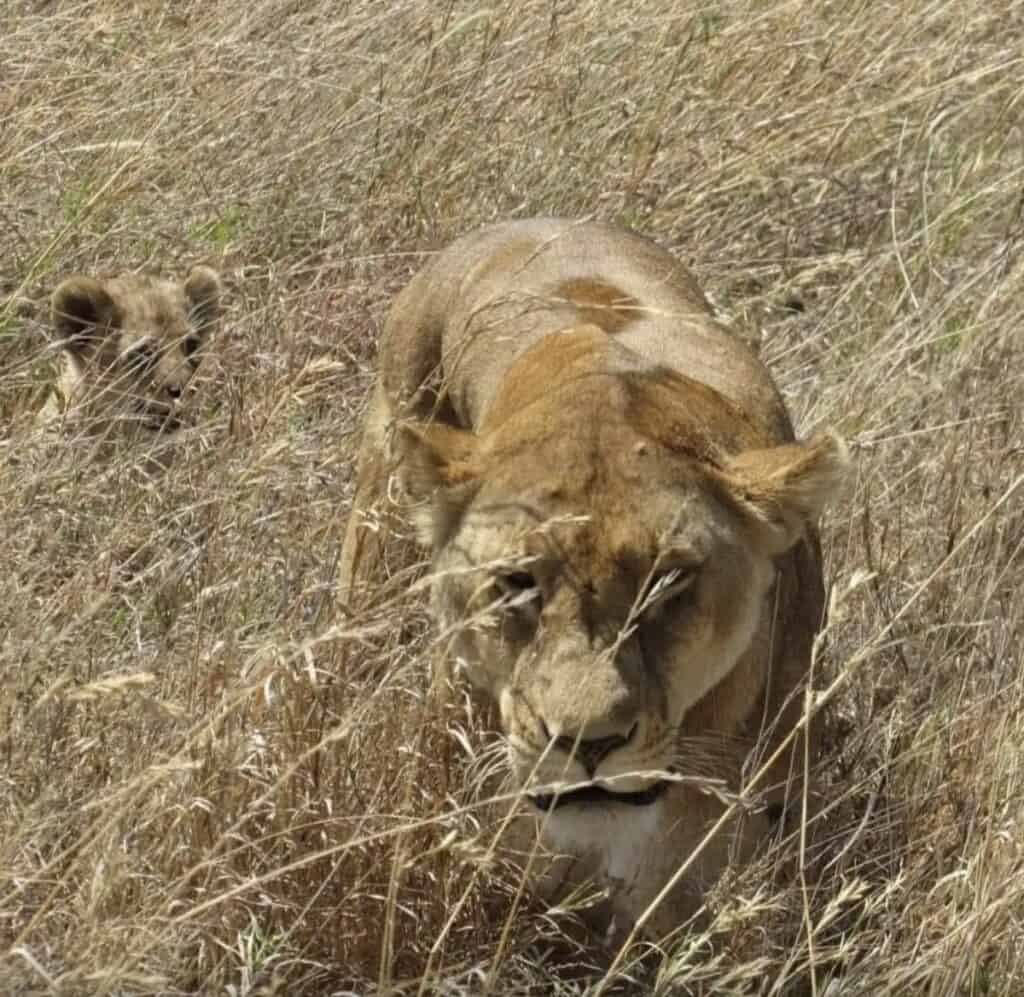
A guide of mine once told the story of a time when lions came into camp in the wee hours of the morning.
Cubs started playing with some loose ties on the side of his tent. They ended up dragging the tent around the camp a bit (stakes are often not used).
But he stayed in the tent and stayed quiet, and eventually, they got bored and wandered off with mom. If he’d made a loud ruckus, they probably would have left sooner.
Be aware that these things can happen, but if you keep your cool, it’s pretty exciting, and a good story to tell.
- Do your very best to stay in your tent until morning. If you do have to leave it at night, take a headlamp or flashlight, and put on your glasses.
Listen carefully before leaving your tent. And take a good look around before venturing out. The safety of leaving your tent at night depends a lot on where you are. Listen to the advice of your guide.
Better yet, unappealing as it sounds, a wide-mouth jar with a good-fitting lid can come in handy. And maybe lay off liquids late in the evening!
- If you do hear an animal in the camp, just stay put, stay quiet, listen, and enjoy. Don’t leave the tent. Unless you have food in your tent, you won’t be disturbed.
- You are more likely to encounter danger in human form if you camp where you’re not allowed. Don’t stay in an area where you’re not sure if you should be camping.
It could turn out to be a private yard, a restricted area, or even a high crime area. Be sure to check this out before setting up your tent.

4. Where You’re Allowed to Camp in Africa
Camping is not allowed everywhere, and when you are a visitor to Africa it’s hard to know where camping might not be permitted.
You may drive through a lovely spot and wonder if you can just stop and set up camp overnight. In some countries such as Namibia, this is fine.
However, in others, like Botswana for example, rules are more restrictive. If you find a spot where you’d like to camp in the bush, you’ll need to look for the nearest village.
Locate the chief and get his permission. He’ll probably ask you to pay a fee.
The most important thing to remember – leave your camping spot the same, or better, than you found it. Always. And be extremely careful to completely extinguish and bury any campfire.
I recommend that you camp in designated spots in national parks and reserves. Not only is it more convenient for you, but it decreases the impact on the landscape in general.
You can find your camping spots as you go, but in the busy season, you could have a hard time finding available sites. Try booking ahead if you can.
🏕️ Book your campsites in advance with Booking.com!
5. Types of African Tent Safaris
If you decide to book an organized safari, for a few days or a few weeks, you’ll need to choose what type of style of camping you’d like to do.
When it comes to camping in Africa, there are different comfort levels. The details vary according to the company you’re travelling with.
There are also different levels of participation, which will also vary. You may need to help out with cooking, washing up, or packing.
Or these things may be taken care of for you. This should all be spelled out for you in the documents the tour company provides you with.
Be aware that, while you may have wifi with some of these options, never expect it. Plan to be unplugged, and download anything think you might need.
While you’re downloading, consider adding these apps. They will come in handy for any trip through Africa.
Note: There should always be a way to recharge cameras and electronics on your safari vehicle.
➦ Wild Camping in Africa
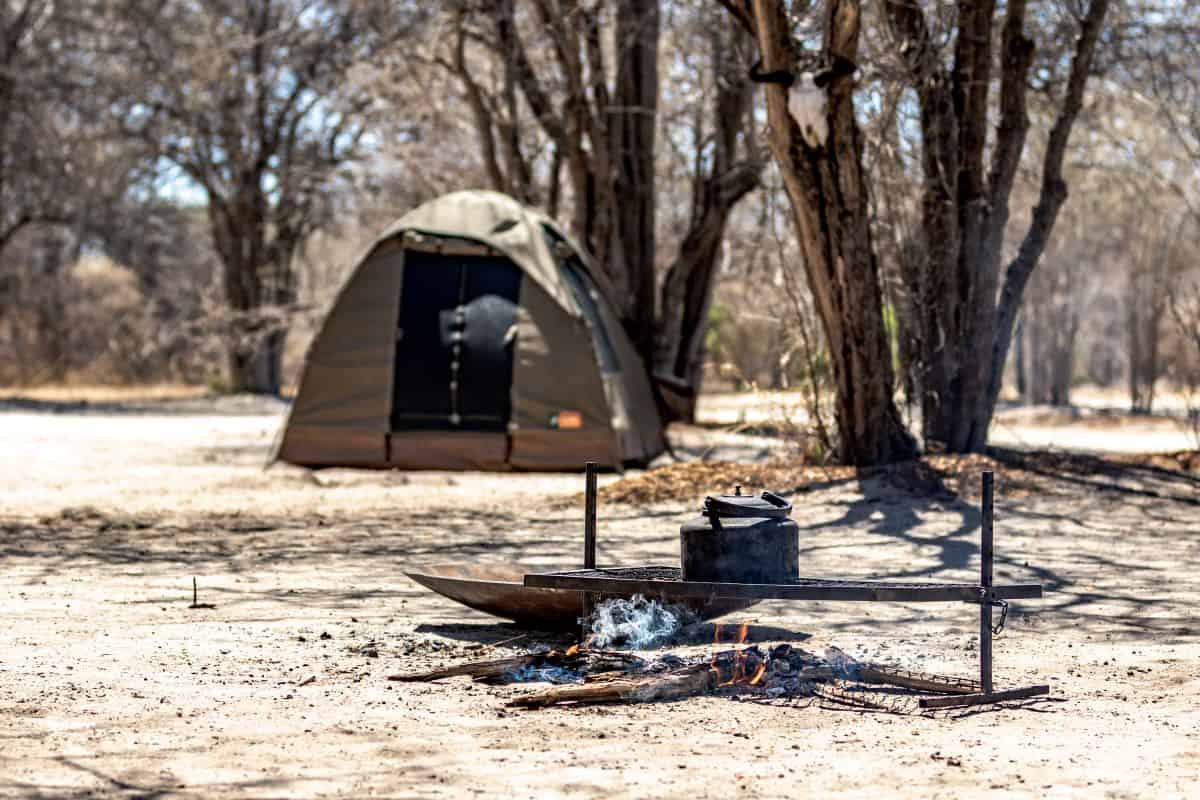
You may decide to go “wild camping” in Africa, where tents are set up in the middle of the bush. I love this type of camping.
A bush toilet may be set up for you. This is a pit dug, a seat over top, and enclosed in portable canvas walls.
Or you may simply step behind a bush. In this case, any toilet paper would be buried or taken out by each person.
You’ll use a little zip-top bag, to be disposed of later.

There are no fences around camps. For this reason, you’ll be strongly discouraged or even forbidden, from leaving your tent during the night.
Be extra sure to go to the bathroom before you head to bed.
It’s always exciting to hear animals in the camp during the night. Or see elephant footprints in the dirt around the tents in the morning.
But you don’t want to run into one at night when you get up to pee.
There may also be a bucket shower, again enclosed in canvas walls. No hot water (usually), but it feels blissful after a hot day in the bush.
Cooking is done in the open over a fire. In the morning everything will be packed up, and the area left as if you had never been there.
➦ Designated Campgrounds
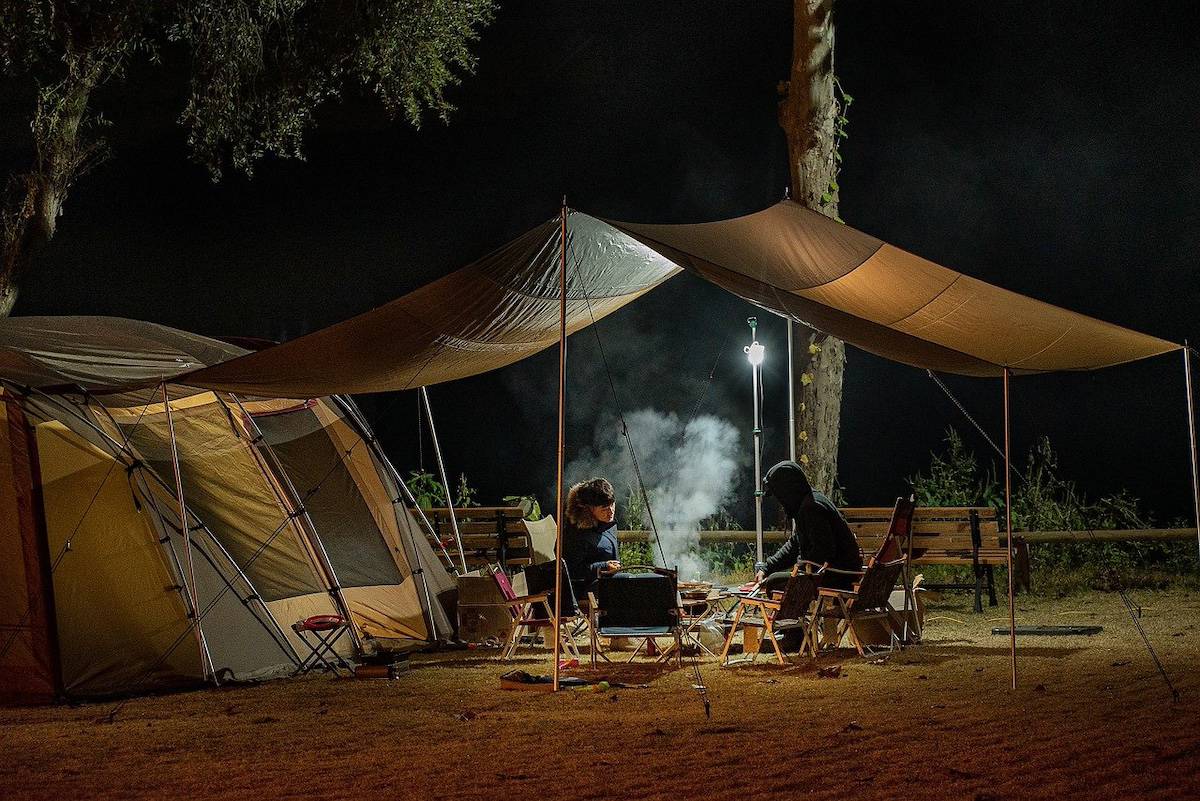
A similar set-up is the camping safari in which tents are set up in designated campsites.
These may have different facilities such as indoor plumbing, perhaps a restaurant and/or pool, and the chance of wifi.
There may be en suite chemi-toilets, or not.
Or you might come across the treasured pit toilets here. These are in a narrow wooden enclosure, like an outhouse.
They’re simply a narrow dirt pit in the ground that you will squat over.
Practice makes perfect here, and you’ll learn to adopt a wide stance, both for stability and for aim.
You might feel like you need help with your balance or with standing back up. If this is the case, find a sturdy stick and make it your friend.
All of this depends on the safari company you’re with. Some of these campgrounds may have lodges or permanent African safari tents, instead of you setting up your own tent.
A safari tent is one with a higher level of comfort than a mobile tent.
There may even be chalet-type accommodation.
➦ Tented Safari Camps
A step up in comfort level is a safari that is based out of a permanent tented safari camp.
These can have amenities that are anywhere from basic to luxurious, complete with perks like your own butler!
Yes, these are still considered camping, as you will be sleeping in canvas tents. Permanent luxury tents. Aka. glamping in Africa.

6. Reasons People Love Safari Camping
If you haven’t already guessed, I love African camping safaris. But it’s not just me. There are many reasons that people come from all over the world to sleep in a tent in the African wilderness.
- You get to experience the sights and sounds of Africa while camping in a way you can’t in a lodge. Listening to the sounds of the animals while you drift off to sleep is unforgettable.
If you’re anything like me, you’ll find yourself trying to stay awake so you don’t miss anything.
- The chance to experience mornings. The sunrise, the sounds of Africa’s fascinating birdlife, and the taste of coffee in the wild. Jump on it if you have the chance.

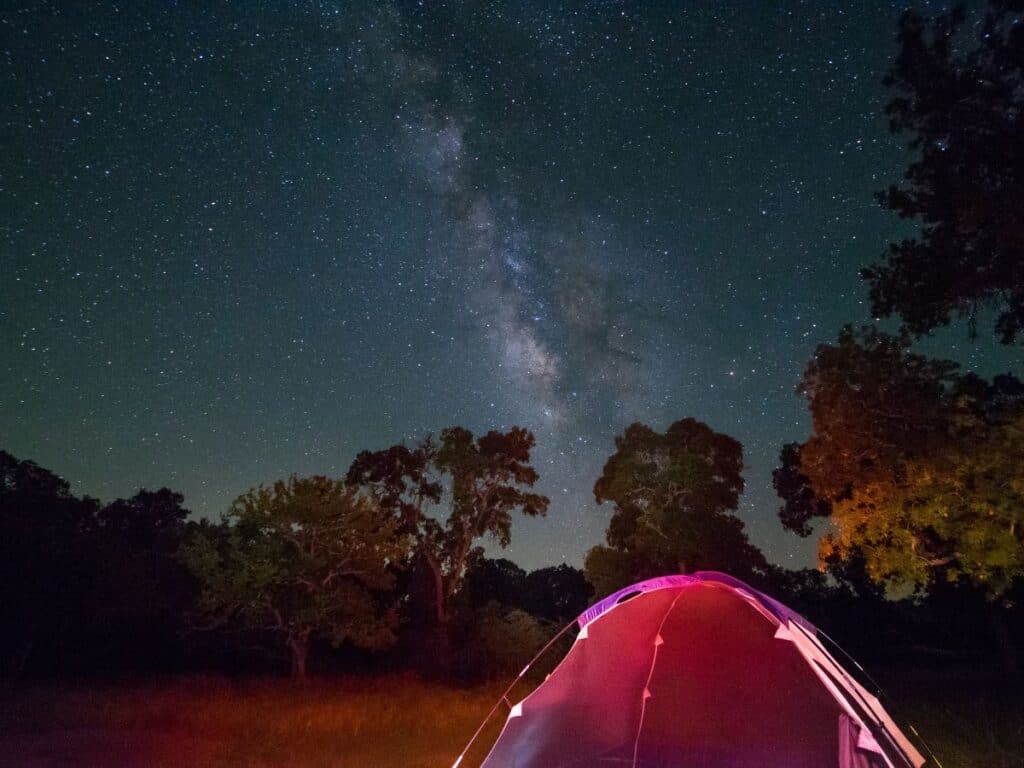
- Especially if you have a chance to sleep under the stars, stargazing in the African wilderness is some of the best in the world. Read more on star gazing in Africa in this article about South Africa, and this Namibia story.
- If you’re on a budget, camping safaris in Africa tend to be less expensive than lodges or all-inclusives. If you fall into camping in Africa for this reason, you’re going to be hooked for life.
- If you take part in an organized camping safari, you’ll be fascinated to see how much can be cooked on, and in, a campfire. I’ve had the best baked treats, cooked in the ashes of a fire.
Apart from the usual meat and pap (cornmeal), your cook can wrangle up cakes, loaves of bread, and other impressive items. Camping/cooking lesson safaris should really be a thing!
7. What You Can Expect On a Camping Safari in Africa

Once you’ve decided on the type of camping safari experience you’d like to have, the questions will keep popping up.
Here are a few more answers.
Who Will Accompany Your Group
Generally, there will be a local guide/driver who speaks your language quite fluently. Of course, another language may have been prearranged through the tour company.
If you’d prefer a language other than English, ask if they have one available. Translators can often be used.
There may also be another person who does the cooking and washing up.
What Gear You’ll Be Responsible For Bringing
You are only responsible for your personal items. You may need to take a small pillow, a sleeping bag liner, or other similar, small comfort items.
These should be noted in the documentation the tour company sends you.
Be sure to read it thoroughly.
You may also be asked to bring water for the trip.

If this is the case, there will be arrangements made to pick it up as a group.
Food will be provided, but you may want to bring some snacks if you tend to get the munchies.
**ALWAYS tell the guide if you have food with you, and they will let you know if it needs to be kept shut away with the rest of the food.
If you’ll be sleeping in a tent, it may attract animals if you keep it in your bag.
I’ll discuss more about what you’ll need to pack later on.

8. A Typical Day Camping in Africa on Safari
This is where the fun really starts.
Mornings on safari come early. I’m not an early riser, but on safari I can’t get up early enough.
You will be told the night before what the morning’s itinerary will be. The guide may come to each tent and speak quietly outside the door to make sure you’ve woken up.
The wildlife tends to be most active in the early morning hours, so expect to be up before the sun. You’ll have breakfast before setting out in your safari vehicle. This is usually a Land Cruiser.
It will either be open at the sides or with a top that raises up. The vehicles tend to have large side windows if they aren’t open-sided.
Tip: Because it is so open, be sure to wear sunscreen – bring the bottle – along with a full reusable water bottle.
A wide-brimmed hat and sunglasses are also necessary. I recommend a hat clip so your hat doesn’t blow off, and a sunglass retainer cord to keep help track of your shades.
The open vehicle can get windy, and you don’t want to lose anything.
Be sure to check the temperature at your location before you leave home. June, July, and August are winter months in southern Africa, and it can get cold.
You may need to start out dressed warmly in the morning – heavy coat, knit hat, and gloves. It’s miserable to be shivering on the safari vehicle. I find layers most useful.

Your game drives may last as long as 4 hours, or longer if the sightings are good. You should be informed if there will be a stop to have a snack.
If not, you might want to have a granola bar or biltong in your daypack (but not in your tent!).
There will be periodic stops for people to go to the bathroom. If you have to go in between times, don’t be afraid to ask.
If you do stop on a game drive, always look around before going behind the bushes. And never wander off without letting someone know where you’re going.
Your guide will cover these rules with the group.
Lunch Break
Once you’re back at camp, you’ll have lunch, and then have a few hours free. This is when the wildlife is snoozing in the sun, and it’s a good time for you to snooze too.
If you’re on a longer trip, you might want to take advantage of these hours.
Your guide can help you find a basin and water. Then you can do a bit of hand-wash laundry. You’ll have brought along some laundry strips – see the list at the bottom.
Depending on where you are, there may be local women who will offer a laundry service to the group. This can be really convenient.
It won’t cost much, so tip as much as you’re able to. And, wash your underclothes yourself.
Get to Know Your Guide
This is also a good time to read, get to know your fellow safari-goers, and chat with your guide. It’s always interesting to talk with the guides and any other local people who might be along.
They can tell you a lot about the land and the animals, as well as the local culture. They’re great sources of information!
Feel free to wander around a bit, but don’t go far from the camp, and don’t go anywhere without letting your guide know.
And if they tell you to stay put, listen.
Afternoon Game Drive
In the late afternoon, you’ll go on another game drive. You’ll have time to enjoy a spectacular African sunset before arriving back at camp.
Then it’s time for dinner and a good chat before turning in.
Final Tip: Whatever you do, don’t forget to tip your guide and cook at the end of your trip. Speak with the other people in your group to decide how much.
Remember, the guides get a very, very small portion of what you paid for the trip as their wage, and the success of your trip was thanks to them.
9. Top Camping Safaris in Africa

“Our second safari with Bobby Tours was more magnificent than our first, beating our high expectations from our first tour pretty handily!…” (read reviews)
Tanzania Budget Camping Safari – 4 Days
See the Serengeti, Ngorongoro and Lake Manyara
⭐️ Rated 4.5 out of 5 with 10 reviews!
“…If I’m back in Tanzania for another safari, I will definitely be using the company again. Thanks!” (read reviews)
Tanzania National Park Safari – 3 Days
Visit Tarangire National Park, Ngorongoro Crater, and Lake Manyara.
⭐️ Rated 5 out of 5 with 49 reviews!
“Amazing experience, loved every second of it. Could not have find a better team… to make us feel welcomed and safe. They made all that was possible…” (read reviews)
Adventure Camping Safari – 4 Days
Rough Camping in the Northern Circuit of Tanzania.
⭐️ Rated 5 out of 5 with 43 reviews!
10. Where to Camp in Africa – Popular Safari Countries
Southern Africa and East Africa are full of excellent camping opportunities. Here are a few:
➦ South Africa
South Africa National Parks have excellent campsites that can, and should, be booked in advance online. Go to their website to find a list of all the parks and what facilities are available. It’s best to book directly through SanParks.
Be sure also to check out the Wild Card park pass while you’re on the site. If you intend to spend a lot of time in South African parks, a Wild Card can be a big money saver.
➦ Namibia
Namibia Wildlife Resorts are the Namibia National Park accommodations – campsites and lodges. They can’t be booked online, but you can go to the National Park website, and browse what’s available.
Here you’ll also find the dates available. Use their contact form to send your choices to the park office, email them to reservations@nwr.com.na, or call +264 61 2857200.
➦ Tanzania
Tanzania National Parks have a variety of campsites and huts on their site. Most are not available to reserve in advance.
The website provides details on what the parks offer. You can book your campsite at the gate entrance when you arrive.
You can find more details about the parks you will be visiting at their individual park websites. For example, campsites in Serengeti National Park can be found on their website.
➦ Botswana
Camping independently throughout Botswana is a little more complicated. You will need to construct your itinerary long before your trip, ideally a year or so.
Campsite enquiries can be made on individual park websites.
Another alternative is to visit YourBotswana.com. They have a great list of community concessions and private camps, along with the contact info for each.
➦ Kenya
Wild camping is permitted in Kenya and is an excellent option. “Wild camping” refers to camping wherever you can find a spot, no reservation required, and no facilities available.
There are also designated campsites throughout Kenya’s national parks, but few are available to book in advance.
The homepage for Kenya Wildlife Service has a list of the country’s national parks and reserves. One of these is the famous Masai Mara National Reserve, home of the Great Wildebeest Migration.
You can visit each location’s site, browse their options, and book in at the campsite when you arrive. Be aware that the different locations vary widely when it comes to what they offer in terms of ablutions, etc.
✅ Get periodic info on travelling in Africa, AND a free Planning Checklist to make planning your trip easier and more stress-free!
11. What to Wear on Safari
For a 10-day camping safari, I’d suggest:
- 3 short-sleeved shirts and 2 long-sleeve button-downs, the crumpled-linen-look ones.
- A sweatshirt or light fleece for cooler evenings.
- One pair of long khaki pants, and 3 pairs of comfortable shorts in thin, quick-dry fabric.
- 5 pairs underwear, 2 bras, also the quickest-drying fabric ones you have.
- 3 pairs of socks.
- If you find that it will be winter while you’re here, be sure to bring the proper clothes. Gloves, scarf, knit hat, and a good coat. Down is great because it’s light and it packs up nice and small.
▶ What NOT to wear
- bright and very dark colours like navy, black, orange, and red. Mosquitoes and tsetse flies tend to be drawn to these colours – they don’t need the encouragement!
- camo-coloured clothing is worn by the military and can get you in trouble if you have it on. It’s even illegal in some African countries.
If you’ll be in Africa longer than 10 days, the list is the same! You have your laundry detergent sheets and clothesline. You’re all set for whatever Africa throws at you.
🌍 Get a comprehensive Packing List PDF 📋 sent right to your inbox ↯
What to Pack for Your Camping Safari

• I always encourage packing just a single carry-on bag, especially for safari.
Luggage space will be limited, and soft bags without wheels work best.
This type of bag is my favourite. Also find reviews of the best bags in Best Luggage for Safari.
• A Grayl water purifier bottle and Steripen water purifier are really great, eco-friendly alternatives to a bunch of plastic bottles.
• Water purification tablets are also a great alternative to disposable bottles of water.
• A good camera, at least one extra battery, and more memory cards than you think you’ll need.
• A small mirror if you need to know what you look like before you emerge from your tent in the morning.
• A rechargeable headlamp and a small flashlight, the brighter the better
• Sunscreen and insect repellent with DEET. You need it, the natural ones aren’t strong enough.
• A wide-brimmed hat and clip, and sunglasses with a retainer cord (eg. Chubs).
• Comfortable, close-toed shoes, and pair of flip-flops.
• One small microfibre towel
• One sarong and one long, narrow scarf in neutral, cool fabrics.
• Any comfort items your Africa camping safari company suggests, eg. small pillow, sleeping bag liner.
• Toilet paper and hand sanitizer.
• Laundry strips and elastic clothesline
There is a complete packing list, along with a guide on what to pack and how to pack it how to pack it here, that includes toiletries, etc.
I will mention here that shampoo, conditioner, and skin cleanser and skincare bars are the way to go. Toothpaste tablets, too. There are some great ones available now.
They save liquid space in your carry-on, and there’s no risk of them leaking all over everything in your bag.
▶ What NOT to Pack
- jeans – this is controversial! I love jeans, but I never take them when I travel to Africa. The simple reason for this is, that I want everything I take to be easy to hand wash and quick-drying. Two things that jeans aren’t. I’ll pack nylon or fine cotton shorts and trousers.
- plastic grocery-style bags. These are banned in some countries. Take a foldable daypack along. Either can be used while shopping, as well as to hold your water bottle, sun protection, and whatnot when on the safari vehicle or out exploring the cities.
- large amounts of cash and valuable jewelry. ATMs are common in towns and cities, and jewelry runs the risk of being lost or stolen.
- heavy guidebooks. There are great guidebooks available for download.
- anything you think you might want with you. If you don’t know if it’s necessary, it probably isn’t. Leave ‘just in case’ stuff at home.
⛺Camping in Africa: Frequently Asked Questions
What is camping in Africa like?
Your camping experience could be anything from basic to luxurious. You’ll fall asleep to the sounds of the wildlife and wake up to spectacular African sunrises!
Is camping on safari safe?
Yes. If you follow safety guidelines and respect the wildlife, camping on safari is very safe. If you’re unsure, an organized safari before jumping into an independent camping safari is a good idea to learn the ropes.
Is it safe to camp in Serengeti National Park?
Yes. Camping areas in the Serengeti are patrolled by park rangers whose job it is to look out for the safety of the visitors and the wildlife.
What country has the best camping?
This depends on the experience you’re looking for. For a wild bush camping adventure, Kenya can deliver. For a more civilized experience, South Africa is for you.
What is a bucket shower in Africa?
A canvas enclosure, open at the top, is set up at the edge of camp. A pulley system will allow a large bucket of (maybe) warm water to be positioned over your head, to be poured a bit at a time by pulling a rope. It’s blissful after a long day in the bush.
In which countries is wild camping allowed?
Wild camping, or the practice of camping outside of designated campgrounds, is subject to varying regulations across Africa. This reflects the continent’s different legal and environmental landscapes.
While specific policies can change, here’s an overview of the general situation regarding wild camping in Africa:
➣Namibia: Known for its stunning landscapes and desert terrain, Namibia is one of the African countries more receptive to wild camping.
There are areas in the countryside where it’s possible to camp in the wild, but it’s always best to seek local advice or the landowner’s permission.
➣Botswana: While Botswana offers vast wilderness areas, wild camping is generally not allowed in national parks and protected areas without a permit.
➣South Africa: Wild camping is not widely permitted, especially in national parks and nature reserves where you need to stay in designated campsites. There may be some areas in more remote locations where wild camping is tolerated, but permission from landowners is essential.
➣Morocco: In more remote areas, especially in the Sahara Desert and the Atlas Mountains, wild camping can be practiced, but it’s advisable to ask for local advice or permission from landowners. Some areas may have restrictions due to environmental or cultural reasons.
➣Ethiopia: Offers some opportunities for wild camping, especially in less populated and rural areas. However, it’s always recommended to check with local authorities or communities.
➣Madagascar: The situation is similar to other countries, where wild camping isn’t officially regulated, but asking for permission from local landowners or community leaders is a good idea.
Note: Regulations can change, and the acceptability of wild camping can vary greatly even within a country. Research the specific area you plan to visit, and consider environmental impact, safety, and local customs.
Seeking permission from local authorities or landowners is not just respectful but often required.
Where can I go camping in South Africa?
Kruger National Park, Kgalagadi Transfrontier Park, Addo Elephant National Park, and Hluhluwe–Imfolozi Park offer a wide range of safari camping options, from basic campsites to luxury safari tents.
Is camping expensive in South Africa?
Camping in South Africa offers options for all budgets, with a wide range of costs. Basic campsites in national parks or public grounds can be very affordable.
The cost increases with mid-range sites with more amenities and gets pricier with luxury camping or “glamping” in private game reserves. Prices fluctuate based on location, amenities, and season, with higher rates during peak times.
Summing it Up: Camping in Africa!
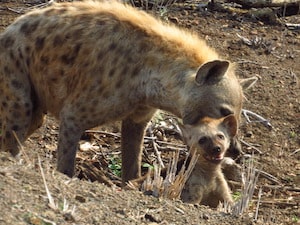
There are times while camping in Africa that it’s easy to feel like the world still belongs to the animals.
It’s an utterly unique experience. The African wilderness is an amazing backdrop.
The simplicity of camping allows you to feel a genuine connection with nature. It gives you the chance to appreciate the raw beauty of the continent.
Take on this adventure and immerse yourself in the wilderness! Camping in Africa can be a part of an extraordinary journey.
You’ll remember feeling that little tremor in the ground when the lion in the distance roared into the darkness. You’ll wonder if you imagined it. You didn’t. And you’ll never forget it.
Happy travels!
Related Articles
• Travel Resources
• How to Plan a Trip to Africa in 15 Steps
• Types of Safaris in Africa
• 40 Safety Tips for Travel in Africa 2025
