
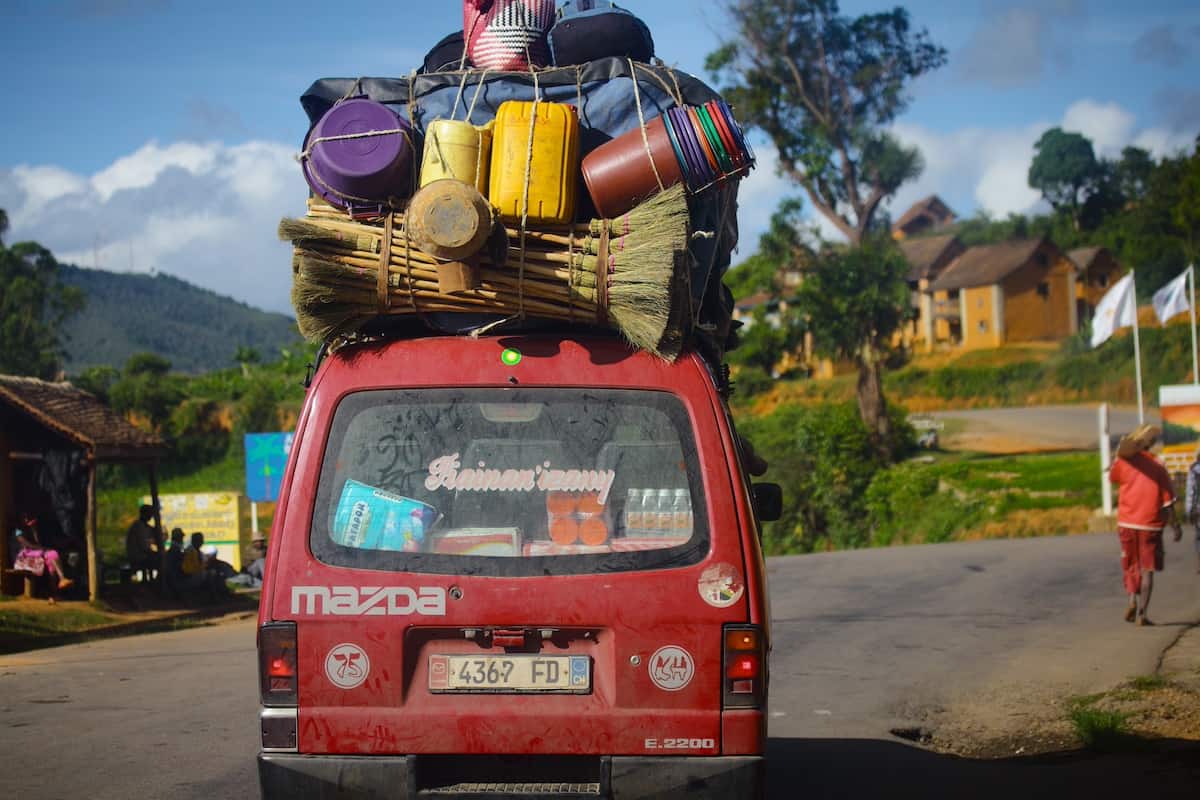
Your Africa Packing List: An Epic Guide for 2025
When deciding what to include on your Africa packing list, there’s a lot to think about. Whether you’re going on safari, just exploring, or both, it’s easy to get overwhelmed.
But you’ve already planned your trip, and you’re excited! Now it’s time to get stuff together so you’ll have everything you need, but nothing you won’t. Then you can relax.
I know it took me a few tries before I was able to pack just what I needed. And before I (mostly) stopped leaving behind important stuff.
Below you’ll find tips and guidelines about travel essentials for Africa that can help to blow your anxiety out of the water.
These are all based on what I’ve learned throughout my years of travelling, and my many trips to Africa. I’ll help you choose the best bag for you, and suggest some products that make it easier to pack light, too.
Plus you’ll find info about what to wear in Africa, wherever you are, whatever you’re doing. Click here to jump straight to the packing list!



The Ultimate Africa Packing List
This is your comprehensive list of what to pack and why. You can also get this packing list in a pdf by clicking here.
• Your bag – Read through the information below for help in finding the perfect bag for your trip. Depending on what sort of adventures you have planned, it could end up filthy!
Or tossed around, strapped to the top of vehicles. Or squashed under other luggage. Don’t use a bag you’ll worry about getting dirty or damaged.
• Packing cubes, if you’ve decided to give them a try. I have pros and cons pros and cons here. Having different coloured cubes, or doing something to differentiate them makes it easier to find what you’re after.
• Reusable zip-top bags. A handful of small bags can come in handy for so many things. From left-over cookies to the 6 pairs of earrings I bought at a market.
Any time I haven’t packed some, I’ve ended up buying them.
• A sack or pillowcase for laundry. FYI, plastic grocery bags are banned in many parts of Africa. You’ll be fined if you’re seen with one.
• A pack-away tote, duffel, or daypack. I like to take one that I can use for things I’d like to keep close on the plane. This one is great because it folds up to tuck away.
I’ll also use it for carrying snacks, maps, rain jacket, etc. Things that I need when I’m out for the day exploring.
It does triple duty as a reusable shopping bag for groceries and souvenirs. A daypack is especially useful if you’ll be exploring on a bicycle.
• A pair of flip-flops to slip on during your downtime, such as around camp on safari. They should be easy to pack and not take up much space. These have been my favourites for years.
• A pair of hiking shoes/trainers/hiking boots. Ideally just one of these. This will depend on what sorts of activities you’ll be enjoying.
You might be doing a walking safari, or otherwise walking through the bush. You’ll want to have closed-toed shoes on for that.
• A wide-brimmed hat preferably, or cap. A hat will offer better protection for neck and ears. Non-negotiable for keeping the sun off. It’s good too, for keeping crazy hair contained while camping.
• hat clip to attach your hat to your shirt, so you don’t lose it when it blows off.
• Sunglasses and cord
• Fork, spoon, knife (not sharp), and bottle/can opener. Again, any time I haven’t brought these, I wished I had. I wrap them in a cloth napkin or old dishcloth and keep them in a reusable zip-top bag.
• The 1L airline-approved plastic/quart bag for your liquids. There’s a 3-1-1 rule in place here, for now.
• Shampoo, conditioner, face wash, skincare, and body wash bars. There are some really great bars of all kinds on the market. I’ve started using them at home, as well as when I travel. These are my all-time favourites.
• A case for your bars – Or two. I like ones that close up for travel, and also have a tray on the bottom so the bars aren’t sitting in water.
• Toilet paper. If you’ll be doing any camping out, especially, you’ll need to take your own toilet paper. Even if you aren’t, it’s a good idea to pack some. Eventually, you’ll need it.
Wiggle the cardboard centre out so you can squish it flat. If you’re in Africa for a while you’ll be able to buy single rolls there.
• Toothbrush, floss, lip balm. Consider toothpaste tablets. One less liquid for your bag.
• Nail clippers, tweezers, nail brush.
• Hair clips, ties – you know what you need here.
• A toiletry bag for your other necessities. These could be the bars, hairbrush, toothbrush, etc.
• Earplugs, in case you have a noisy neighbour or need them for the plane.
• Sunscreen and mosquito repellent, with DEET. You can’t find DEET in African pharmacies. Sunscreen can be bought here, but if there’s a particular type you need, best bring it with you.
• Deodorant – a stick or bar, to keep liquid quantities down.
• Laundry strips. These work great and are uber-portable and convenient. An elastic clothesline, too.
• Any medications. This includes your malaria prevention. These often need to be started a couple of weeks before you leave. Advil, allergy medication, anti-itch cream, etc.
• Contact lenses. Consider using glasses for the trip – one less thing to worry about.
• Spare pair of glasses/contacts, if you have them.
• Period supplies. You will be able to find them at pharmacies, though tampons may take a longer search. Consider reusable products, like a menstrual cup or washable pads.
• Medium-sized or small microfiber towel, or a sarong/Turkish towel. See why up here.
Layers. Depending on the weather, you may need a fleece or heavier jacket in the early morning or late evening. A thin down jacket is light and packable.
If you’ll be doing any wildlife spotting, take earth tones. Nothing that will catch an animal’s attention. Avoid dark colours, as these attract mosquitoes and tse tse flies.
• A rain jacket. Perfect for a cooler evening, for layering, and for rain. You don’t want to have to sit out a rainy day inside.
• One or 2 long-sleeve button-down shirts. They’re good to keep the sun off if you burn easily, they work as a layer. They can look a bit dressier if necessary. Try a “washed linen” sort of finish, so you don’t have to worry about wrinkles.
• 2 pairs of shorts, or skirts if you’ll be in a place where more modest dress is required.
• 2 pairs of long pants if shorts won’t be appropriate. Jeans are fine, but they’re hard to hand-wash and slow to dry. Try some loose cotton or linen pants, or khakis if it’s cooler.
• 2 comfortable T-shirts.
• 5 pairs of underwear, 3 pairs of socks, if you’re a sock wearer. Women, 2 bras should be enough. Remember, you have laundry strips to wash things out.
Stick with cotton underwear, even over the antimicrobial fabrics. They breathe, they’re absorbent, and they’ll keep you comfortable and healthy.
• Your preferred sleepwear. It usually cools off a bit at night – leave the satin nighty at home. Yoga pants can do double and triple duty.
• A universal sink plug. It’s surprising how many sinks in the world have no plug. You’ll need one if you want to wash your underwear.
• The best camera you can afford. A lot of the things you see will be once-in-a-lifetime sorts of things. You’ll want good photos as keepsakes. Take at least one extra battery. And more memory cards than you think you’ll need.
• A flashlight and headlamp. Rechargeables are great, as are high lumens when you’re in the bush.
• Binoculars, especially if you’ll be going on safari. I recommend a 10 x 42 x 60 pair, though any is better than none. Well worth the space they take up in your bag. Many sightings will be from a distance.
• a swimsuit
• A universal adapter. You’ll have to charge your phone, camera battery, etc. Keep in mind that, even though it’s called ‘universal’, it’s not going to be useful for every country. For example, South Africa’s plugs might be too bulky. Read the fine print on the box. C, M, N, G, and D plugs are used in different places around Africa.
• Find out if your destination country has a different standard voltage than your devices were made for. If it does, you’ll need a voltage converter/adapter.
• A small power strip can be really useful if you have a few things to charge. It’s much easier to bring a power bar than several adapters or having to take turns with your devices.
✤ A great alternative that I highly recommend is a converter like this one that comes with adapters suitable for Africa. It’s a power strip itself, too, with 3 outlets and 4 USB ports.
• A good portable power bank. Or consider bringing a solar-powered one, just in case you lose access to electricity.
• I always take a car power inverter. This lets you plug a regular electric cord into your car. It may sometimes be your only option for charging your camera battery.
• Your phone, with the data you arranged here. An Airalo eSIM is a terrific way to go for cell and data.
• Earbuds. Wireless ones are great but can be easy to lose, so corded might be better. Your choice. Noise cancelling is a plus.
• A refillable water bottle. Collapsible ones are terrific. But if you tend to always have yours out, you don’t have to worry about packing it away.
• A Grayl water purifier bottle for turning non-potable water into drinking water. They’re an excellent alternative to buying bottled water, and you can be sure to have healthy water anywhere.

Packing List Tips and Tricks
You’ve read through the comprehensive packing list above. Now here’s a quick discussion is what’s on it.
Packing gets easier with practice. You become familiar with the different bags that are available and which work best for you. Many people will fall in love with a particular type of bag, and that’s all they use.
We also learn which of the different gadgets and accessories available are the most useful to us. And what you can live without.
Plus, the more you travel, the more of an idea as to what might be found at your destination if you need it.
Here are a few more things to think about.
1. When you’re making up your packing list for Africa, start with your own clothes.
It’s tempting to load up on Tilly hats and dresses in space-age fabrics. And pants with zip-off legs and 42 pockets!
But it’s just not necessary – plus you’re going to end up losing those legs. (However, some people love those zip-off legs. It’s your choice.)
Besides, you’re visiting a new culture with the hope of learning about that culture.
Standing out in “tourist” clothes will create a distance between you and your surroundings that will work against you.
You’ll be most comfortable in your own things, and you’ll look less like Indiana Jones.
That’s a good thing.
Besides, wouldn’t you rather spend that money in the souks of Marrakech than at your local Eddie Bauer?
However, there are a few substitutions that I would suggest. Keep in mind that our goal is to avoid checking a bag at all costs.
2. Consider also that you’re likely going to be away for more than a week.
That means you’ll want to bring clothes that are easy to wash and will dry quickly.
Consider swapping out your jeans for a comfortable pair of nylon pants. A little with a bit of lycra for stretch can help. Yoga pants are also a great option.
They’re easy to handwash, and they dry quickly.

3. IMPORTANT: Keep to light, neutral colours, because darker tones like navy and black will attract mosquitoes and tsetse flies 🦟 .
Then again, white and bright colours will draw the animals’ attention to you when you’d like to blend in. Khaki and tan are perfect.
4. Also, NO camouflage.
Camo is associated with paramilitary groups, and is even illegal in some African countries. When deciding what clothes you’re taking, it’s always best to just leave the camo at home.
5. You’ll need a towel with you.
And it should be a small microfiber towel. It will take up less room in your bag and will dry faster than cotton. Honestly, though, I hate the feel and just take a small cotton towel. So far so good.
Or if you’ll be spending time at the beach, think about taking a sarong as your towel. This is just a length of fabric about 64″ x 44″.
A sarong is great because it can be used as a towel. But it can also be a beach blanket, a light cover on a hot night, a bottom sheet, a head wrap, a skirt… it has a lot of uses.
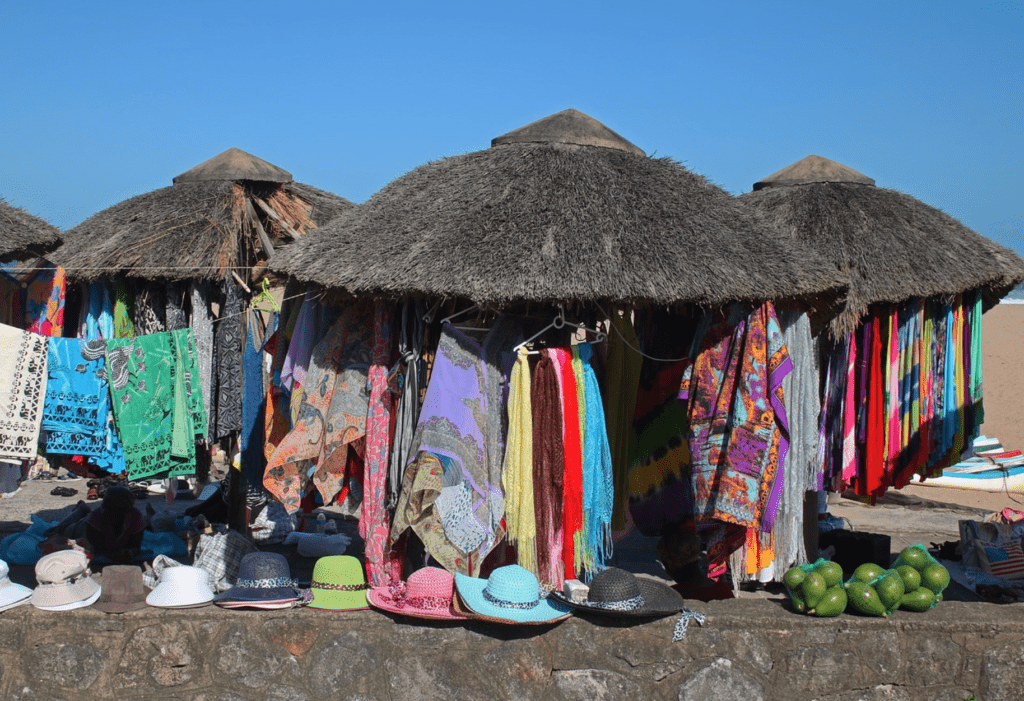
A sarong is a fun item to get on your trip, too, if you’d like to wait to purchase one.
You’ll be able to use it at home.
Then you’ll be drawn back to those amazing days away whenever you do.
A Turkish towel is also a great option, but it tends to be thicker and takes up more space.
What to Wear in Africa
What to wear in Africa depends in a large part on where you’re going, at what time of year, and for what purpose.
➥ The continent of Africa contains 8 different climate zones. Research the weather, and dress in layers in the colder parts.
It might be that you’ll be spending time in different countries. Your journey may overlap more than one season. If you’re wondering what to wear in Africa when it’s cool, think layers.
And of course, keep in mind the local customs and religious climate. This will save you a lot of trouble.
➥ Tanzania, for example, is deeply conservative. You will need clothes that cover the knees and shoulders. Even in Zanzibar, where the population is 99% Muslim.
Loose-fitting pants are appropriate in conservative places, though skirts are more comfortable in the heat. You may be tempted to wander around in shorts because of the heat.
But, unless you’re at your hotel or swimming on the beach, don’t. Wear a cool, flowy skirt or a pair of loose, light trousers.
Remember – always respect the culture.
Find more information about what not to wear in different African countries. Check it out in the IWIF list of 17 best African countries to travel to.
➥ Remember that below the equator, seasons are opposite to what they are in the northern hemisphere.
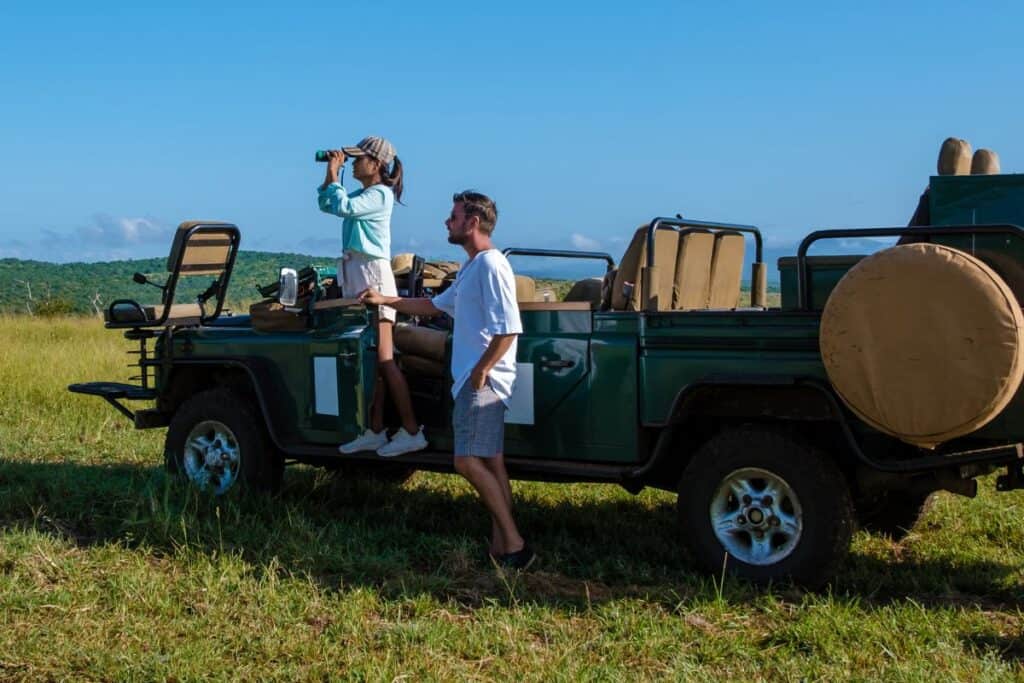
➥ If you’ll be going on safari, feel free to relax any dress restrictions. When you’re in the bush and around few people, dress for climate and comfort.
In addition, winter in Africa can be cold. Some places get snow, so pack for that if necessary. Higher elevations in Morocco and South Africa even have skiing!
Most of the items in this list have been discussed earlier on this page. Others can be found on this page and on this one.

Find Your ideal Bag
First, find the perfect bag for your African journey.
Then fill it with only the essential essentials.
My goal and my recommendation are to NEVER check bags. Be realistic with what you’ll need. Any length trip, from a weekend to several months, can be accomplished with just a carry-on.
I’m living proof of that.
A trip to Africa is usually longer than a week or a ten-day vacation, but not having to check a bag is a huge stress reducer. This is especially true if you’re travelling alone.
Having a carry-on of a manageable size and weight makes getting around infinitely easier. You’re also safer when you’re not distracted by having to juggle bags.
But it might take practice.
You’ll find some products that will help farther down this page. And remember, carry-on size and weight limits vary between airlines, so be sure to check before you pack.
There are standard domestic and international measurements, but still, always check.

Luggage styles are many and varied, and when it’s time to decide what to pack for your trip, you need to check out your luggage options. The bag you take with you can make a big difference in your trip.
The Duffel
This is my favourite style of bag. A handgrip and shoulder strap on a duffel are musts for me. I also do without wheels as much as I can, as they take up bag space and add weight.
A nylon carry-on duffel saw me through 6 months in southern Africa. It can be done!
The Roller Bag
Hard cases and roller bags are NOT allowed on small bush planes, like what you would use on a fly-in safari. So be sure to check your itinerary before you decide on one.
If you plan to travel by car or are spending most of your time in one place, Cape Town maybe, this might be a good choice.
Keep in mind that a soft-sided case is a bit easier to stuff and stow, but a rigid case will hold its shape better if you have to sit on it to get it to close 😉.
The Backpack
If you expect to be wearing it for longer periods, be sure that there are good waist and chest straps. You’ll also need comfortable shoulder straps. This is a good choice if you’re going on any safaris.
They’re easy to carry and pack, and to stow in a pile with everybody else’s gear.
Try to get one that has a clamshell opening. Many backpacks that are designed for hiking have just a single opening at the top. You need to empty it completely to get to the items at the bottom.
Look for zippers on the sides and bottom. They help. A lot.
Duffel/Backpack Hybrid
These duffels have backpack straps that tuck away into a panel in the back. It can be used as a duffel and a backpack. They’re not comfortable for extended wear as a backpack, though. You can even find a hybrid that also has wheels.
I think these have their place, but the wheels still take up space and add weight to the bag. Remember, carry-on only!

How to Pack Your Bag for Africa
Pack Smart – Travel Light
Packing Cubes
➛ The only downside I find to packing cubes is this – in order to make the most of the space, I like to tuck things into the tiny spaces.
The cubes can limit the ability to do this. Removing one of the cubes disturbs everything else, and can cause chaos.
I do recommend giving cubes a try – I prefer a light, thin nylon – but they might not be a holy grail item for you. I love the ones from Cotopaxi because they’re different colours, making it easier to find what I’m looking for.
They’ve also got mesh side panels and top carry handles. I also like that they’re made of repurposed nylon that’s lightweight and very durable.
Zippered Pouches
➛ I also like to have several small zippered pouches, preferably see-thru. Small medium and large, with different coloured piping on each.
I use these for things like chargers, power converters and adapters, batteries, and other odds and ends I want to keep track of.
If there’s anything that drives me crazy, it’s having to dig through my whole bag to find something. These small mesh pouches are the perfect solution.
Laundry Strips
This is a product that I like so much that I use them at home as well as on the road. Laundry strips are just liquid laundry detergent without all the water – and all the plastic waste!
Use a whole strip for a load of laundry, or tear off a piece if you’re washing out a few items in the sink.
Some brands do still use plastic packaging – look for the compostable paper packaged options; there is a selection of them.
They work great at keeping my clothes clean. They also can’t be beaten for convenience and portability – no bulk, no liquid.
Laundry can be an issue on long trips. These are a good solution. So are laundry tablets!
Travel Tip: Research the type of travel adapter you’ll need to charge your devices at your destination. If you’ll be renting a car, a DC to AC power inverter that you can plug regular power cords into can be really handy.
Solid Alternatives
The selection of shampoo and hair conditioning bars has really grown in recent years. I use Ethique brand.
The solid skincare and toothpaste tablet options have too. And the quality has improved so much that I use these at home, as well as for travel.
With space for liquids at a premium in carry-ons, these are a great option. Many are soap-free, plastic-free, and animal and earth-friendly, inside and out.
Some products come in travel-friendly sizes – or, when the bar you’re using at home gets small enough, tuck it in your travel pack.
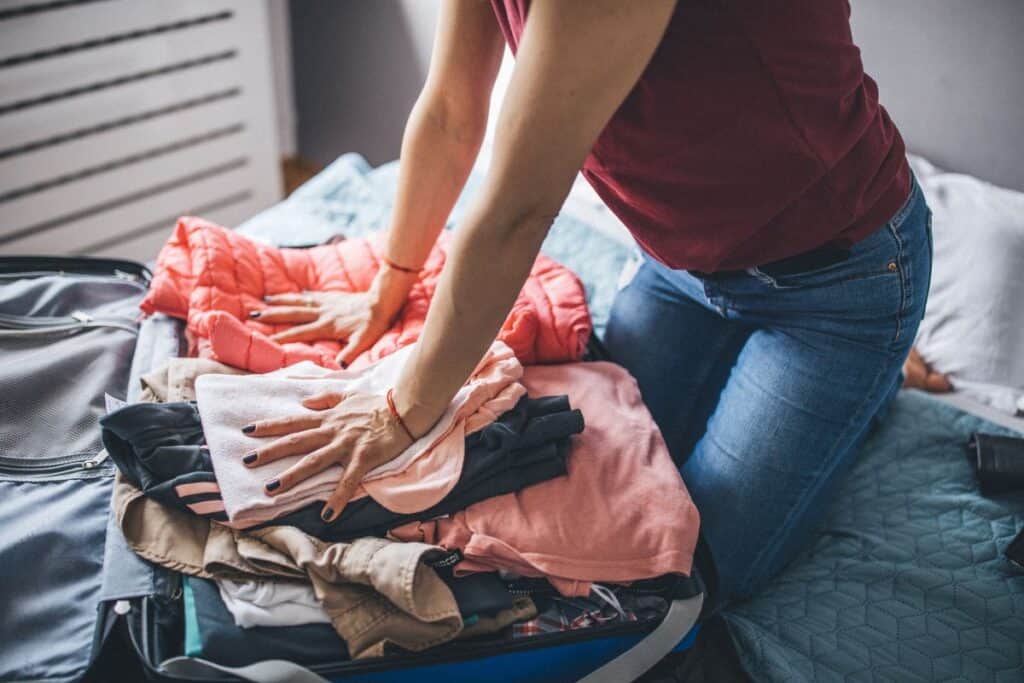
Pack For Your Health & Safety
While you’re planning your trip, remember to take safety into account. Both your personal safety and the safety of your belongings.
➥ You don’t want to walk around with all of your cash and credit cards. You might consider a tiny travel lockbox that you can attach to something in your room.
These can fit cash, cards, passport, and a phone if you’re swimming, for example. They can be attached to something secure and out of sight in your room while you’re out.

➥ Don’t forget hand hygiene when you’re packing. I suggest relying on soap and water whenever possible. A small refillable container is handy. Filled with hand sanitizer, it can be attached to your bag or belt loop for when it’s not.
➥ Be sure to take a supply of your favourite masks.
➥ Also, always check online to find out what vaccinations are recommended for your destination.
Which ones you will need will depend on which African countries you’ll be visiting. Most countries will have a government website with this information.
Take the information you find there with you to your doctor, and you can decide together what you need. Or if you’re lucky enough to have a travel clinic close by, they should have the info you need.
➥ Remember to talk to your doc about malaria medication. This usually needs to be started a couple of weeks before you leave, so don’t leave this until the last minute.

Pack Your Electronics
➥ I’m in favour of keeping it simple. I can get by for months at a time with just my cell phone.
With Google Maps, a reading app, and an internet browser, I have what I need. I might bring an inexpensive tablet along if I think I might want a bigger screen.
One small device allows access to an infinite number of, apps, guidebooks, novels, magazines and newspapers.
➥ You secured your data before you left home in Planning Your Trip to Africa. So you’re ready to communicate and share your adventures on social media and in email.
➥ Remember, you’ll have to recharge. Research what kind of adapter or converter you’ll need.
If you choose a multi-country adapter, be absolutely sure it can be used at your destination.
Even the ones that claim to be for use in “150 countries” won’t have everything. Larger-sized prongs for South Africa, for example, often don’t fit in those.
Plugs types C, M, N, G, and D are common in Africa. A power bar/adapter set, and one that is also a converter is even better is great.
➥ If you have a few devices to plug in, tuck a small power bar in your bag. This way you won’t have to bring multiple adapters. This can be a huge plus.
➥ Also consider a dual SIM, unlocked phone.
If you’ll be using a local SIM card, being able to keep both SIM cards in your phone makes life easier.
Pack For Your Comfort
➥ I don’t know about you, but I’m always cold on planes, and I hate to be cold.
Gone are the days when passengers were provided with a pillow and blanket, even on long flights. And really, how clean were they??
There are small blankets specifically for travel, in different fabrics of varying coziness.
A sarong or Turkish towel is more multipurpose, but not as warm. Pillows vary a lot too.
I usually take a small fleece blanket and an inflatable neck pillow with a warm, fuzzy cover. You’ll soon discover your favourites.
➥ When I think of comfort, another thing that comes to mind is food. Cold and hungry tend to make me a little crabby.
When I fly, I always take snacks. On longer flights, you’ll usually find a couple of slices of cold pizza in my bag. Candy, nuts, raisins, and jerky are favourites too.
Airport security will occasionally find issues with some types of snacks. It seems to depend on their mood.
But, be prepared to surrender the jerky. The last thing you need is to get on the wrong side of security. It doesn’t matter if they’re right or not.
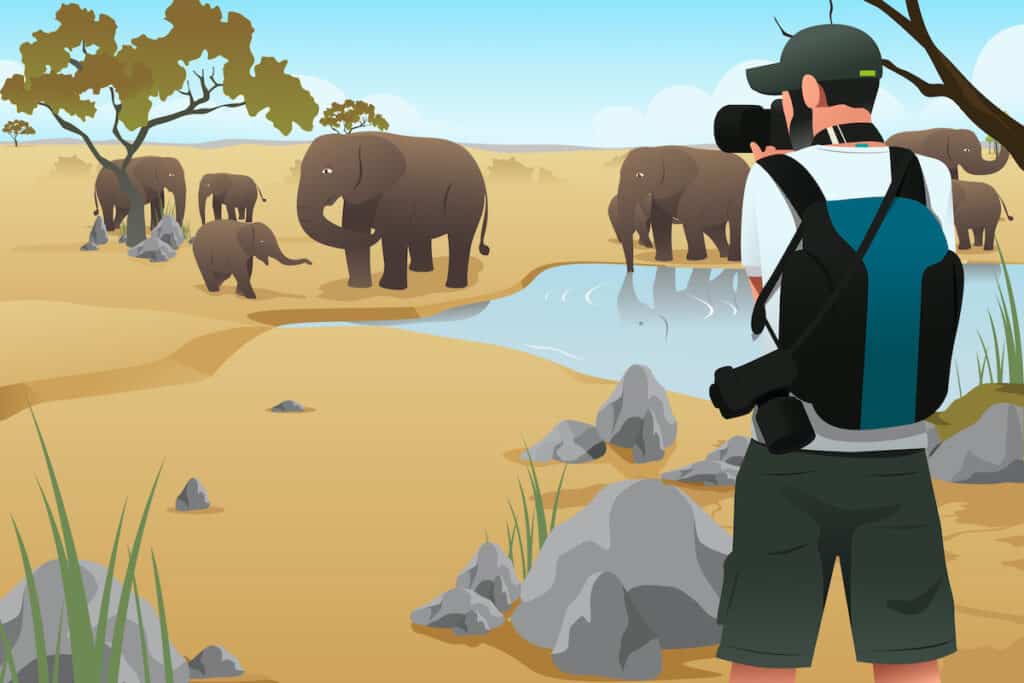
Pack For Pictures
You’re going to want to record your African adventures. To show your friends, of course. You might also want to share on social media, blow photos up and hang on your walls. And you’ll pour over and revel in the memories.
A camera will be at the top of your packing list. You may decide to just use your phone, but I encourage you to buy a good camera with a decent zoom lens. It will be one of the best items you pack.
Go prepared with a camera that will let you meet whatever your goal is. You’ll also want one that you’re comfortable with, so learn how to use it before you leave.
➥ Do you think you might want to blow those images of lions and elephants up and frame them? Then make sure you’re armed with the right camera and number of pixels for nice crisp shots.
➥ If you don’t want to worry too much about the technical side of things, an automatic would be best.
➥ If you think it might be fun to be able to hand out photos as you take them, check out an instant. Children and grown-ups alike enjoy getting small photos like these.
➥ Most importantly, if you’re buying a new camera for your trip, try it out and learn how it works before you leave home.
The Panasonic LUMIX 4K is a great choice for non-photographers like me. It’s a point and shoot with a 60x zoom and wifi connectivity.
It’s also got 4k video caapture for those action shots, and takes great photos in low light.
Be sure to take more memory than you think you’ll need. This is especially true if you’re not sure if you’ll be able to buy SD cards at your destination.
Also, bring at least one extra battery.
✅ Get a Free Travel Checklist for Your Trip to Africa, Right to Your Inbox ⤵️
Summing it Up: What to Pack for Africa in 2025
Packing for your trip to Africa can be a lot of fun with a few guidelines. Now you’ve got all the info you need to pack your single carry-on bag and GO!
Happy travels!
You might also like:
• Why You Have to Go Camping in Africa – All the Facts for 2025
• Standard Luggage Co. Carry-On Candid Review
• Must Have Travel Apps for Africa 2025
• Travel Resources
