
Winter in Africa Guide: Essential Travel Facts from North to South
Who’s up for some snow skiing before heading out on your safari in South Africa? Or my favourite, a snowball fight in Morocco’s Atlas Mountains – after a morning of shopping in the souks of Marrakech?
Winter in Africa is a bit of a mystery. In fact, it’s a common misconception that Africa doesn’t have any winter. There is often a mistaken belief that the entire continent is all hot, all the time.
While Africa actually is the world’s hottest continent overall, it does experience seasonal changes. This is especially true in the far north and the far south, where winter is most noticeable.
Knowing what the winter season could mean for your trip is essential when it comes to what to pack. It could also affect what activities you plan and where you decide to go, even if you won’t be running into snow.
The cold took me by surprise my first time in Africa during the local winter, and I wasn’t prepared. The end of this article has some tips to help you avoid making that mistake yourself.
Below you’ll find what the winter season means across Africa – let’s go!

African Winter on Both Sides of the Equator
Africa is an enormous continent. It stretches 8000 km north to south, lies in 2 hemispheres, straddling the equator. The whole of Africa covers 20% of the earth’s surface.
On a land mass this size, with so many different elevations and topography, the weather is going to vary a lot depending on where you are.
Here’s a quick look at what to expect overall:
African winter by region
Africa can be divided into 5 regions, and we’ll be talking about the seasons according to each of these ➦

Winter as it Travels Through Africa
➣ Northern Region:
- November through March.
- Cool and wet, with snow in higher elevations.
- A good time to escape the heat of the summer.
- Less crowded in the western parts of the region.
➣ Western Region:
- October through March.
- Dry season
- Good time for wildlife viewing.
➣ Central Region:
- January in the north; July in the South
- Tends to be warm and wet, especially closer to the equator.
- A bit cooler and a bit drier as you move away from the center of the region.
- A great time for Humpback whale watching on the west coast.
➣ Eastern Region:
- Above the equator, this region gets the drier, winter weather from July through September.
- Below the equator, the Eastern Region has its drier winter from November to January.
- THE time to experience the Great Migration of the Wildebeest.
➣ Southern Region:
- Winter lasts roughly from May through September.
- Days are warm, but nights can be frosty.
- Winter in the southernmost country of South Africa is the best time to go scuba diving in many places along the coast. This is when some species of whales migrate to these waters, and ragged tooth sharks mate.
Keep in mind, though, that like the weather anywhere, it’s never as predictable as we’d like it to be.
Does it Snow in Africa?
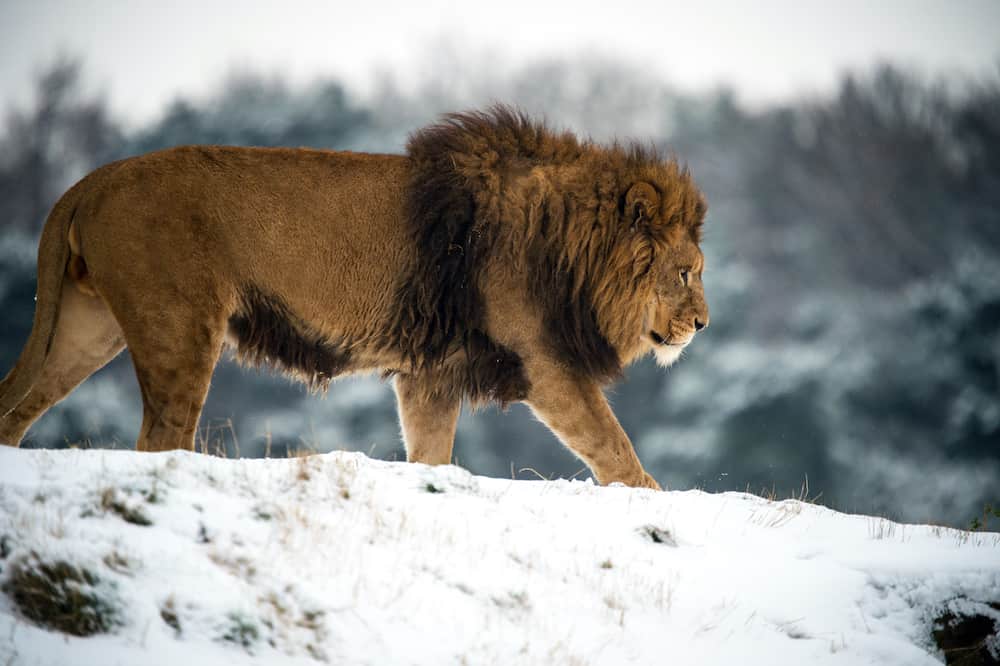
Yes, parts of Africa do receive snow. Specifically spots in the far north and the far south, such as Morocco and South Africa.
The mountain tops of Morocco commonly receive a blanket of snow each year. Downhill snow skiing is a popular pastime in the country’s Atlas Mountains.
Egypt, Tunisia, and Algeria can all experience a bit of snow in the winter, usually restricted to their mountainous regions.
South Africa’s higher elevations can also get some snow, too. Table Mountain in Cape Town receives snow every few years, for example. The last time was in 2023. Plus:
➦ Sutherland, also in South Africa, lies at an elevation of 1500 metres, and snow doesn’t come as a surprise here.
➦ The Drakensberg, or Dragon Mountains, in the eastern part of South Africa, regularly gets snow in winter. In fact, it’s home to the country’s only commercial ski site, Tiffindell Resort.
*UPDATE: As of June 2024, Tiffindell Resort ceased operating and has closed its doors
➦ In addition, places with a variety of elevations, such as Mountain Zebra National Park, receive snowfall occasionally. If you visit at the right time, you could see giraffes and elephants against a snowy white backdrop.
While snow might not happen often in the park, it does typically get frost during the winter months.
There are a few other areas of higher elevation that can get snow, such as the top of Mount Kilimanjaro in Tanzania. Read on to find out more.
But as you move toward the equator from either direction, winter comes more to mean the dry season. No chance of snow, little rain, and some relatively cooler temperatures.
Winter In African Countries
Here are some specifics of what you can expect from winter in these regions, with examples of the different countries we travellers love to visit. Plus, discover why winter might be the perfect time for your trip.

1. Winter in Northern Africa
Northern Africa’s winter season, from November to March or April, is ideal for travellers looking for milder climates. It’s the coolest, wettest time of year.
Generally, it’s the higher elevations that get snow. Temperatures in these areas do reach freezing and often dipping below.
Winter in Northern Africa is a great time to visit for anyone who doesn’t care for the extreme heat. How hot does Northern Africa get? Temperatures of high 30ºCs and low 40ºCs are common in June and July.
If weather in the 20ºC range is more to your liking, January might be a great alternative for you.
✴︎ Morocco – Winter is a great time to visit Morocco and miss the crowds and the sweltering weather. December and January are peak winter months.
- The Atlas Mountains are a great place to have some winter fun in Africa. There are 5 amazing ski and snowboarding resorts for you to choose from.
- Once you’ve had your fun on the slopes, head into Marrakech, just 80 km from the largest resort, on Oukaïmeden Mountain. You can browse the souks and food markets and enjoy the cooler winter temperatures of 13 – 22ºC.
- You can also attend the annual Marrakech International Film Festival. This spectacular event is held in mid-November and is a great reason to come to Morocco in the winter.
- Another amazing winter activity in Northern Africa is surfing. The swells are perfect this time of year, and with an average water temperature of 18ºC at spots like Taghazout, a wetsuit is all you need to enjoy surfing in Morocco.
✅ Book Your Ski Pass and Trip to the Slopes in the Atlas Mountains of
Morocco with Viator Here!
✴︎ Egypt – Winter weather in Egypt is similar to that in Morocco. And though the only snow skiing you’ll be able to do is indoors, snow does sometimes fall in the Delta and northern Nile Valley areas.
- If you’ll be travelling to Africa, January is a great time to be in Egypt. The weather is cooler, with average daytime temperatures between 18ºC and 23ºC in Cairo. In the desert, the temperatures can actually fall to freezing.
- Summer temperatures, especially in the Egyptian desert climate where the most famous attractions are, can be oppressive, to say the least.
- Winter in Egypt is the perfect time to tour the temples and pyramids. A cruise down the Nile and a trip to the Aswan Dam are also ideal winter activities. This a popular notion, though, so try to plan in advance as much as possible.
- While you’re here, check out the annual Victory Day celebration in Egypt, just before Christmas. Coptic Christmas celebrations take place, as well, each January.
🌍 For a free Planning for Africa Checklist, join the club here! Plus, get an insider’s look at what’s new at IWIF

2. Western Africa
Closer to the equator, which runs through Central and Eastern Africa, the temperature changes from season to season are smaller.
Winter in Western Africa translates to the dry season, and typically lasts from around October through to March. The temperatures are lower, the bugs are fewer, and it’s a great time to spot wildlife.
When there’s less rain, the animals have fewer waterholes to choose from, and less foliage to get lost in. This makes the animals easier to spot, and you can generally see more of them at one time.
However, it’s also Harmattan season. A harmattan is a dusty, dry windstorm that blows northeasterly, from the Sahara over land into the Gulf of Guinea.
This means that the air can be very dry, so be sure to pack moisturizer and lip balm. Bring a jacket, too. Even though daytime temps can be in the high 20ºCs, evenings can dip into single digits.
✴︎ Burkino Fasso – winter in Burkino Fasso is the time to catch the International Festival of Masks and Art – FESTIMA if you speak French. Held in even-numbered years in Dédougou, it generally runs through the first week of March.
- The festival began as a way to preserve the traditional culture of the native tribespeople. It will give you a chance to experience masks and traditions from many of the Western African countries.
✴︎ Benin – January is the annual Voodoo Festival. This is also known as the ‘Vodoun Festival’, or Traditional Religions Day.
It’s held in January throughout the country, but the main celebration is in Ouidah. The spirits are honoured through song, dance, and, well, spirits. Gin especially.
- While you’re here, visit Parc National de la Pendjari. It’s one of the best parks in the area to see the iconic wildlife of Africa. And as mentioned above, in winter they’re easier to spot.

3. Central Africa Region
Not to be confused with the country the Central African Republic, the region of Central Africa is large, and lies on both sides of the equator.
The average temperature in the countries along the equator is around 25ºC to 28ºC and only varies month to month by a couple of degrees.
The climate of Central Africa is very much wet and hot, both north and south of the equator. July and August see less rainfall in the far eastern and far western parts of the region.
It also gets drier as you move away from the equator. North of the equator, January is the driest month. To the south, it’s July.
In the far northern and far southern parts of the central region, the drier season can last several months. The area along the coast, especially as you move south, also tends to have lower rainfall.
As you can see, when it comes to winter in Central Africa, winter is hard to pin down.
• hot and wet along the equator; lower rainfall east and west in July and August
• drier as you move away from the equator; driest in January up north, July in the south
• the coastal area, especially in the south, gets less rainfall
• higher elevations tend to be cooler and wetter
✴︎ Gabon is a coastal country in Central Africa and sits right on the equator. The best time to visit is in the drier season, which falls between May and September.
July and August are the driest. This is considered winter here.
Note the word “drier”. With an annual rainfall of 2.5 metres, you could still experience heavy rain at any time in Gabon. The dirt roads can turn into muddy messes.
The clouds stick around through the drier weather, but occasional clear moments will shine through with blue skies.
• August’s Festival of Cultures is a great reason to visit Gabon in the winter. The country’s various ethnic groups don their traditional garb and dance and sing the days away.
• As well, July through September sees the humpback whales visit. Spend some time on the beach or take a boat trip, and see how many tail flukes and spouts you can spot!
✴︎ Angola winters fall between June and September, and are a slightly more predictable dry season – Angola’s version of winter. It does still rain, though, so don’t leave your rain gear at home.
Temperatures average in the mid to high 30ºs during the day and generally fall no lower than 16ºC at night. This does vary a bit though, and temps will get a bit cooler as you move south, away from the equator.

4. East Africa
Because it also lies on both sides of the equator, winter in East Africa is also difficult to define.
In general, July through September is the dry season throughout the southern part of East Africa, below the equator.
The Horn of Africa, though, north of the equator, experiences its dry season from November to January. The Horn of Africa is made up of Ethiopia, Eritrea, Somalia, and Djibouti.
There is snow in the higher elevations. You may have seen pictures of Mount Kilimanjaro in Tanzania, with its snow-capped peak at 5,895 metres high.
✴︎ Kenya lies on the equator in Eastern Africa. Winter in Kenya is its dry season, from July to September, is one of the best times to visit.
Not only are there fewer watering holes, making it easier to find the wildlife. But this is when the Great Wildebeest Migration happens!
A truly incredible spectacle, the migration involves the movement of over 2 million wildebeest, as well as zebras and antelope. Each year, the animals follow the rains and the green grass, clockwise from the Serengeti in Tanzania to the Maasai Mara in Kenya.
Though the movement is ongoing throughout the year, the bulk of the migration, and the drama, happen now. It’s an unforgettable sight.
✴︎ Madagascar is a large African island that lies off the coast of Mozambique in Eastern Africa. Winter in Madagascar is beautiful and warm. Being an island, it has it’s own unique weather patterns.
The island is best known worldwide for its lemur population. Winter, especially around September, is when these unique primates give birth to their pups.
Winter is also the season for humpback whales to make their annual visit to the waters around Madagascar. They come each year from the chilly Antarctic to have their young in the warmer waters of Africa.
All in all, winter is an ideal time to visit Madagascar.

5. Southern Africa
The winter changes in the weather will be more pronounced as you move toward the extreme south end of the continent. Winters in Southern Africa typically last from May or June through to early August or September.
The weather this time of year tends to be dry and sunny, with mild temperatures, but that depends a bit on where you are.
✴︎ For example, consider winter in South Africa. The western section gets the majority of its meagre rainfall in the winter months. The eastern part, however, tends to be rainier in summer.
Temperatures during the day are warm, but winter nights can be very cool, even frosty in some areas. While winter in Southern Africa is an excellent time for wildlife viewing, mornings in a safari vehicle will be cold.
Evenings, too, will be chilly – be sure to pack accordingly.
✴︎ Namibia is a desert country, and a lovely place in the winter. Days are dry, especially in the northern parts, and temps average in the low 20ºCs.
Nights and evenings get cold though, so warm clothes are a must. Layers are a great idea if you’ll be out from early morning into the afternoon.
If you’ll be in Namibia towards the end of winter, try to catch Maharero Day, also known as Heroes’ Day. Celebrated in Okahandaja each August, Maharero Day honours its war heroes with parades and traditional costumes.
✴︎ Botswana is home to the Okavango Delta, as well as such famous parks as Chobe and Moremi.
Winter is an excellent time to visit Botswana, one of my favourite countries. The blistering heat of the summer is on hiatus, and the daytime temperatures are blissful.
But again, nighttime can drop below freezing, so plan accordingly. Trust me it’s no fun sitting on the back of a safari vehicle wishing you’d remembered your gloves and knit cap!
Attending the Kuru Dance Festival is an amazing way to celebrate winter. Held each August, the festival takes place on the only bushman-owned wildlife farm in Botswana.
The Dqae Qare Game Farm is in the Kalahari Desert, near D’kar, and is alive with traditional song and dance for 3 brilliant days.

Safari: Dry Season Vs Wet Season in Africa
If you’re looking forward to game drives and the best wildlife viewing, the dry season is generally the prime time to go on safari.
As mentioned, during the dry season the wildlife is easier to spot due to the limited number of waterholes and sparser foliage. As well, temps are cooler, especially early in the season.
Birds and baby animals, on the other hand, tend to be more plentiful in the rainy, or wet season. Remember, the rains also bring heat and humidity, as well as mosquitoes.
Generally, the best times to see wildlife in the more popular safari destinations are:
July and September – Tanzania, Kenya, Uganda and Rwanda
May and October – South Africa, Namibia, and Botswana

What to Pack for Africa in the Winter
If you’re wondering what to wear during your winter adventure in Africa, pack layers. And if you’ll be on safari, choose earthtones. Bright colours will make you more noticeable to the animals.
It’s better to blend in with neutrals. This applies any time of year.
You can never go wrong with a light, breathable, waterproof jacket in Africa. It’s a great top layer in cooler weather, and if it’s rainy, you don’t want to have to wait it out inside.
▶ Especially if you’ll be at high altitudes, or in the far north end or far south end of Africa, pack some warm things in winter, especially if you’re planning a safari. Early mornings and evenings can be very cool.
- layers like light short and long-sleeved T-shirts, quick-drying
- a button-down long-sleeved shirt, quick-drying
- gloves and socks
- a knit hat
- a fleece layer
- shorts and long pants, quick-drying. Pants with zip-off legs are popular.
- A down jacket is an excellent option. The jacket is very warm, but thin and light, so it’s easy to pack and takes up little space. This is definitely a must for me.
- A wide-brimmed hat.
- Sunglasses
- Insect repellent, though you may need this less, depending on where you are.
- Sunscreen and bug-repellent
Here’s a great, comprehensive packing guide for all of your packing questions.
✔️ For a more comprehensive, everything-you-need packing list sent
directly to you your inbox 🧳: ⤵️
Summing It Up: Winter in Africa
While you won’t need a snow shovel, you will find winter on this enormous continent. It takes a few different forms, and most of them are beautiful!
It’s hard to find a bad time to visit this enormous and unique continent, but winter is often the best of Africa.
Decide which region looks good to you, and find out a little something about its countries, in North Africa or in Southern Africa.
Happy travels!
Read More About Africa:
• 30 Photos to Inspire You to Visit South Africa
• Exploring Africa: Incredible Victoria Falls Tours from Cape Town
• The Best Dive Sites in South Africa
• Dream Destinations in Africa
