

Are Giraffes Dangerous? The Tall Truth
How cautious of giraffes do we need to be?
Giraffes are fascinating creatures that are often associated with grace and elegance. But many people also wonder – are giraffes dangerous animals?
I would approach this topic with a mix of curiosity and humour. After all, these tall, gentle giants are not exactly the first animals that come to mind when we think of danger in the animal kingdom.
However, as with any animal, it’s important to understand their behaviour and the potential risks they may pose. So, let’s take a closer look at the question of whether giraffes are dangerous, and a few interesting facts.

Are Giraffes Dangerous?
The truth is that giraffes are not typically aggressive toward humans. There are only very rare recorded incidents of giraffes attacking humans in the wild.
I could find only one such incident, and it involved a female giraffe protecting her calf.
When it comes to defending their young, giraffes are fiercely protective parents. They will use their long legs and powerful hooves to fend off any potential threats, such as predators like lions or hyenas.
However, male giraffes do fight with each other for mating rights, and these battles can be violent. When male giraffes fight, they use their long necks to swing their heads like pendulums.
They’ll deliver powerful blows to their opponent’s body. They may just push and shove, but the force of these blows can be so intense that they can actually break bones or even knock a giraffe unconscious.
Interestingly, giraffes don’t typically fight to the death. Once the matter at hand has been sorted out, they can coexist quite peacefully in the same general territory.
Because male giraffes fight this way, the hair on top of their little ‘horns’, called ossicones, gets worn away and they become smooth. This is an easy way to tell a male giraffe from a female one.
Giraffes are not particularly territorial. When they fight it will most often be over a female. Even solitary giraffes appear to be able to live peacefully sharing territory with other solitary giraffes.

Are Giraffes Aggressive
While giraffes may seem peaceful most of the time, it’s important to remember that they are still wild animals with powerful instincts. It’s always best to observe them from a safe distance and respect their space.
But while giraffes may be imposing in size, standing up to 18 feet tall, they are generally peaceful animals. They generally prefer to flee from danger rather than confront it.
Despite their size, they are actually very agile and can actually run at speeds of up to 56 km per hour (35 miles) per hour when threatened.
Giraffes are herbivores, and while they don’t have many predators, they are vulnerable to lions and hyenas. This is especially true when they are young.
So while we may wonder, are giraffes dangerous, the answer appears to be – not unless they have to be.

What is a Group of Giraffes Called?
A group of giraffes is called a tower, which is quite fitting given their height. A typical tower can consist of anywhere from 2 to 32 but can number as many as 50. A tower usually ranges between 6 to 12 members.
Scientifically, though, giraffe groups tend to be referred to as herds. Interestingly, when a group of giraffes is walking, they may be called a ‘journey‘.
This size of a group, or tower, can vary based on factors such as food availability and social dynamics. Giraffes are social animals but do not seem to form strong bonds with other giraffes in their tower.
For this reason, the size of a tower changes as members wander in and out.
The Life of a Giraffe
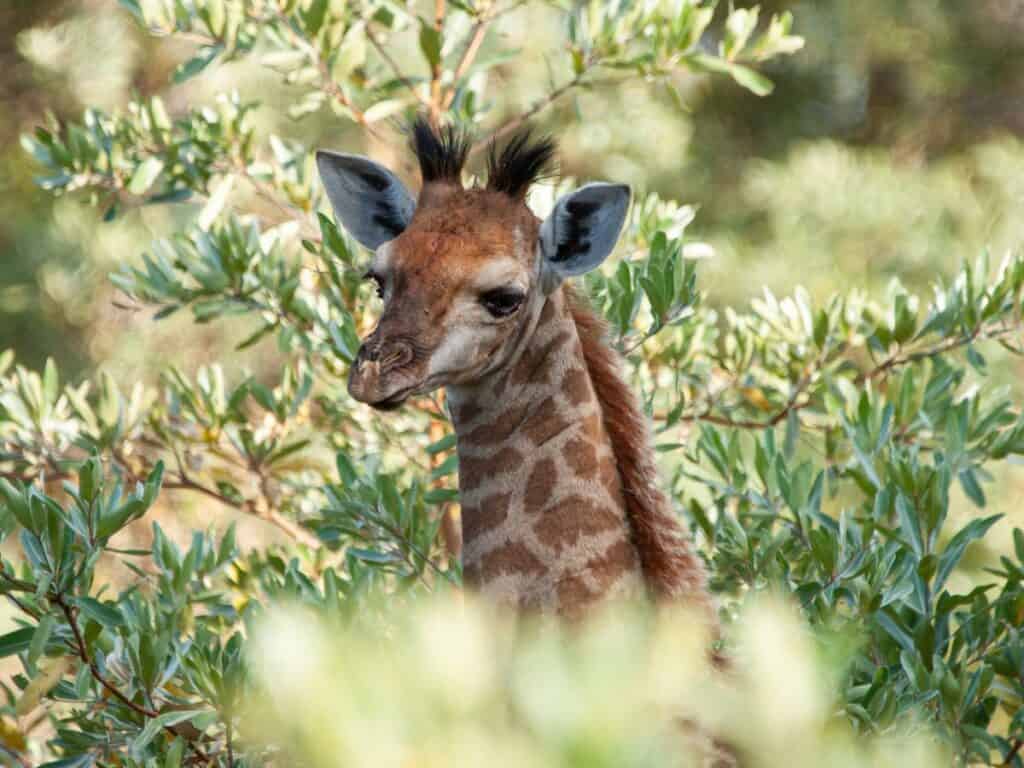
The gestational period for a giraffe can be long, lasting from 9 to 12 months. Once a giraffe calf is born, it will depend on milk from its mother for about 15 months. They’ll start sampling leaves, though, at about 4 months of age.
Interesting fact: when giraffes are born, they drop from a height of around 6 feet. Rather than being hurt by a fall from this distance, it helps the little calf get its start.
The fall breaks the short umbilical cord, as well as tearing the amniotic sac, so mom doesn’t need to break it. The force of the landing stimulates the baby to take its first breath. It’s then able to stand and walk within an hour of birth.
A giraffe’s tower has a hand in protecting her young from potential predators. When a mother giraffe needs to leave her calf to look for food, she’ll leave it in the care of other females in what is known as a creche.
This is similar to our daycares. The responsibility of the creche rotates through a herd as the females take turns.
Though giraffes have no specific ‘breeding season’, tend to conceive during the rainy season, so it’s not unusual to see many calves at one time of roughly the same age.
A tower is generally made up mainly of females and their offspring. The males will leave the tower when they are about 15 months old. They will usually join a bachelor herd, and as they grow older may move off to live in solitude.
Female young might stay with their mother’s tower but do sometimes leave at around 18 months. They tend not to go far, seeming to prefer to stay near their home tower.
A giraffe can live as long as 25 years or so in the wild. As mentioned, adults have few predators, though lions working in pairs have been known to take down the occasional healthy giraffe.

Where Are Giraffes Found?
Giraffes have been found everywhere in Africa. At one time giraffes lived all across the continent. Today they face loss of habitat and fragmentation as the human population grows.
Currently, giraffes are found no farther north than southern Sudan, Chad, and Niger. You can spot giraffes in savannah (grassland with trees) and open woodlands of most countries south of here.
The largest populations of giraffes today are in Namibia and South Africa.

More Giraffe Facts:
- Giraffes can run as fast as 56 km per hour (35 mph), but only in short spurts.
- Giraffe calves are about 1.8 metres (6 feet tall) when they’re born. After all, mom’s milk is pretty high up!
- The pattern of a giraffe’s coat depends on which of the 4 species it belongs to. But no two giraffes, even of the same species, have exactly the same pattern. Each one is unique.
- Giraffes eat leaves from acacia trees which have nasty thorns on the branches. A giraffe’s tongue is very long and agile to move around the thorns and wrap around branches.
It also has tough bumps on its upper lip and sticky saliva to cushion the mouth from the thorns. This lets a giraffe eat any leaf they want.
- The amount of sleep a giraffe gets in a day is up for debate. Some sources say 30 minutes, some say 4.5 hours. In any case, it doesn’t sound like much!
They can sleep standing up but might sit, twisting their necks so their heads rest on their rump. Most agree that giraffes get their sleep in small doses, such as quick 5-minute dozes.
- Similar to cows, the stomach of a giraffe has 4 compartments to digest its food. In between feeding, giraffes chew their cud.
Summing It Up – Are Giraffes Dangerous?
So giraffes are capable of causing harm when they feel their young are threatened. Overall, though, they are not typically considered dangerous animals.
These stunning creatures are a fascinating and beautiful part of Africa’s wildlife. Their distinctive appearance and gentle demeanour make them a favourite of many.
From their long necks and legs to their unique spot patterns, there’s so much to admire about giraffes. So, while we should always approach any wild animal with caution and respect, there’s no need to fear these graceful giants.
Instead, let’s continue to appreciate and celebrate the wonder and beauty of giraffes in their natural habitat.
Happy travels!
Read more about Africa’s wildlife:
➦ How Many Gorillas are Left in the World
➦ Is a Rhino a Carnivore? Plus More Fascinating Facts About Rhinos
➦ 30 Interesting African Animal Facts You Never Knew
➦ Are There Bears in Africa? The Answer Might Surprise You!
