
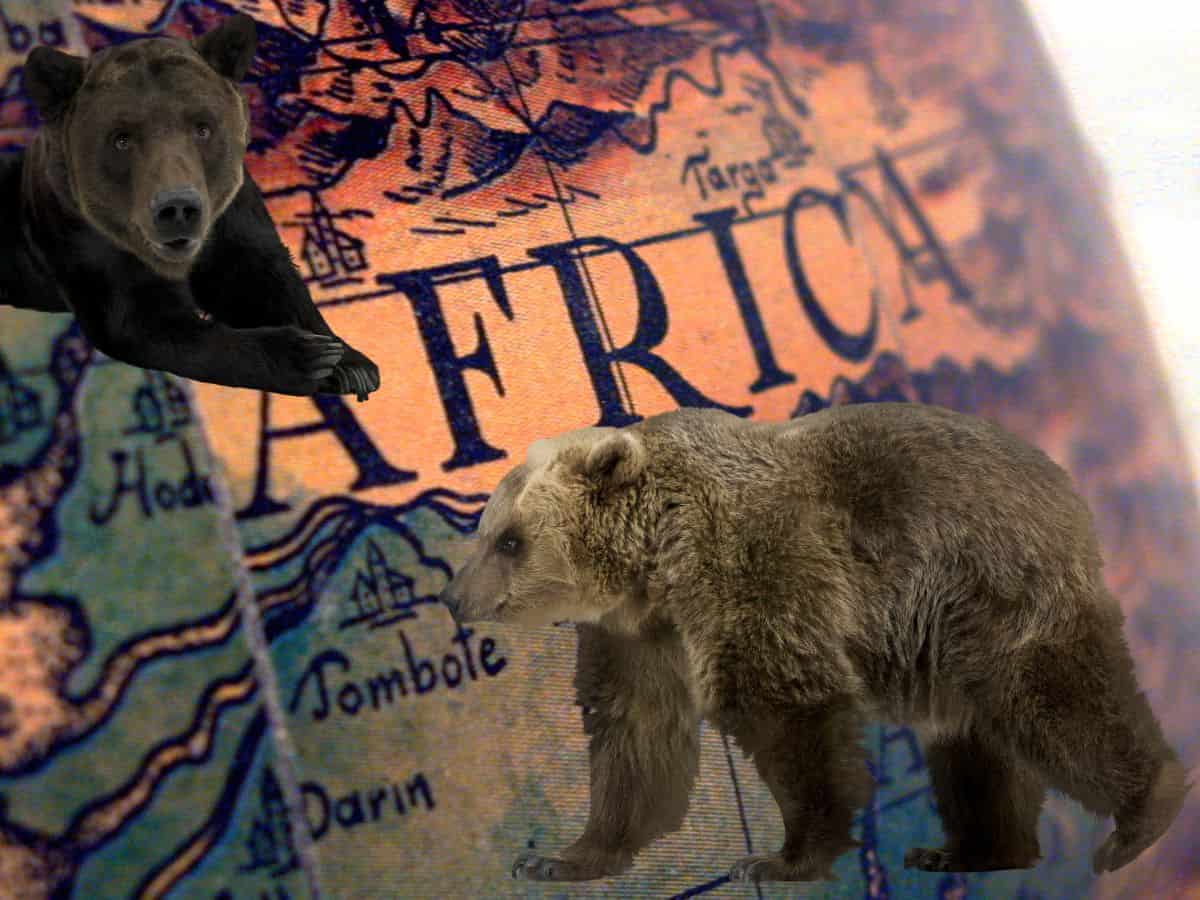
Are There Bears in Africa? Past and Present Facts
Africa is home to an incredible number of animals. In fact, there are more than 1000 species of mammals that call the continent of Africa home. It’s natural to wonder, if there is a species of African bears.
The simple answer is – not anymore. The fact is, though, that Africa’s history does include two species of bears. Read on to find out where those bears roamed and why they are no longer found there.
You’ll also discover how long it’s been since bears have been spotted strolling across the African savannah.

Has There Ever Been an African Bear?
At one time the Atlas bear (Ursus arctos crowtheri), a species of brown bear, could be seen prowling on this continent. This bear was brought to the attention of the public in 1840, by a member of the English armed forces.
The species was officially recognized by researchers soon after. They determined that the Atlas bear was native to parts of North Africa.
They were thought to be mainly herbivorous animals that lived primarily in the Atlas Mountains of Morocco. Their territory seemed to extend across eastern Morocco, as well, and into Algeria, Tunisia, and Libya.

We know very little about the Atlas bear, as the last one was killed by a hunter in 1870. It is believed to have been a dark brown colour, with auburn fur on the chest and belly.
Evidence suggests that the bears grew up to 2.7 metres (9 feet) long and weighed about 450 kg (992 lbs).
DNA studies of the bones of Atlas bears were conducted, butnot much was learned from them. It does appear, though, that they may have been closely related to bears of the Iberian Peninsula. This is the peninsula where Spain and Portugal are located.
These studies also suggest that Atlas bears may have shared lineage with polar bears and brown bears. It does seem fairly certain, however, that they are not closely related to the Middle Eastern brown bear.
The Middle Eastern brown bear was a subspecies of the brown bear, Ursus arctos. They were the bears that lived closest to the territory of the Atlas bear.
If they had been found to be close cousins, it would have answered a few questions as to their origins.

Why Are There No Bears in Africa?
The Atlas Bear is believed to have become extinct in the late 19th century, due largely to hunting. However, the Romans, circa 117 AD, not only hunted the animals but used them for their games, as well.
Between these bears being hunted for sport and fur by humans, and being pitted against one another and against lions in the colosseums, for example, their numbers decreased.
As mentioned above, the last Atlas bear was thought to have been killed by a hunter in 1870. The Atlas bears’ extinction occurred shortly after the development of modern firearms.
This doesn’t seem like a coincidence.
Other causes of the bears’ extinction may have been deforestation and the expansion of human settlements. These bears typically lived in the mountains or woodlands.
Their habitats began to shrink, making it difficult for them to find enough food and shelter, leading to a decrease in their population.
Climate change and competition with other species for resources may also have been contributing factors. About 2 million years ago, in the Pleistocene period, the cooling of the planet caused a decrease in the bears’ prey animals.
It’s believed that Atlas bears existed in Africa for around 5 million years before the last animal was killed.

Other African animals that have become extinct
A heartbreaking fact is that many mammals that once roamed free across Africa are now extinct. Most recently we have lost:
💧 the Barbary lion (1943)
💧 the Zanzibar leopard (1986)
💧 the Barbary leopard (1996)
💧 the Western Black Rhinoceros (2006)
The list of endangered and critically endangered animals in Africa and the world numbers in the thousands.
Is there evidence of other bears in Africa?
Agrotherium africanum, or cave bears, is another extinct species of bear that was believed to have lived in Africa during the late Miocene and Pliocene period, around 10 million years ago.
This species was much larger than the Atlas Bear. Fossils suggest they measured up to 3.5 metres (11 feet) in length and weighed up to 680 kg (1,500 lbs). They were found mainly in the forests and savannahs of sub-Saharan Africa.
Cave bears had many unique characteristics, including their long legs and massive skulls. They were also believed to have been a more omnivorous species than other bears.
This is deduced from their larger teeth. They would have allowed the bears to eat both plants and animals more easily than the teeth of modern bears.
Are There Relatives of Bears in Africa?
While it’s true that the there are currently no African bear species, bears do have some relatives on the continent.
In fact, the closest living relatives of bears include several animals that are common sights in the wilds of Africa.
According to scientific research, these relatives are all fellow members of a mostly-carnivorous group called Arctoidea. The group includes bears, as well as weasels and raccoons.
The bear relatives can be divided into 3 groups:

1. Canids, or dogs
Canids are animals with deep-chested bodies, long muzzles, and non-retractible claws. There are several examples of canids in Africa. Here are some of my favourites:
• Black-backed jackals are common in the open planes of southern Africa and a section of east Africa. They can be seen across Namibia and South Africa, as well as Botswana and Zimbabwe.
Eastern homes for these jackals are Somalia, Eritrea, Kenya, Ethiopia, and Djibouti.
They’re a fairly ancient species, having changed very little in the last few million years. Black-backed jackals are omnivores, snacking on whatever’s handy. They’re often spotted lurking around the remains of lion kills, hoping for leftovers.
• Side-stripe jackals are a bit bigger than their black-backed cousins. They reside in southern Africa, as well as Central Africa. They roam from Chad south through the DRC and Angola, especially in scrubby areas and woodlands.
• African wolves, also known as golden wolves, range across North and West Africa. They’re also found in the Sahel, northern east Africa, and into the Horn of Africa.
African wolves were sacred in Ancient Egypt, and are important in Senegal, too. They are thought to be the first animal created by the god Roog, of the Serer religion.
They also have a place in north African folklore. Parts of their bodies are considered to have medicinal purposes and are also used in different rituals.

• Ethiopian wolves are rare animals known by a few other names, such as Simian foxes and Abyssinian wolves. They’re called horse jackals in southeastern Ethiopia.
They’re found just in the Ethiopian Highlands, across 7 isolated mountain ranges. This is where their only food source lives – Afro-alpine rodents. Ethiopian wolves are one of the planet’s most endangered canids.
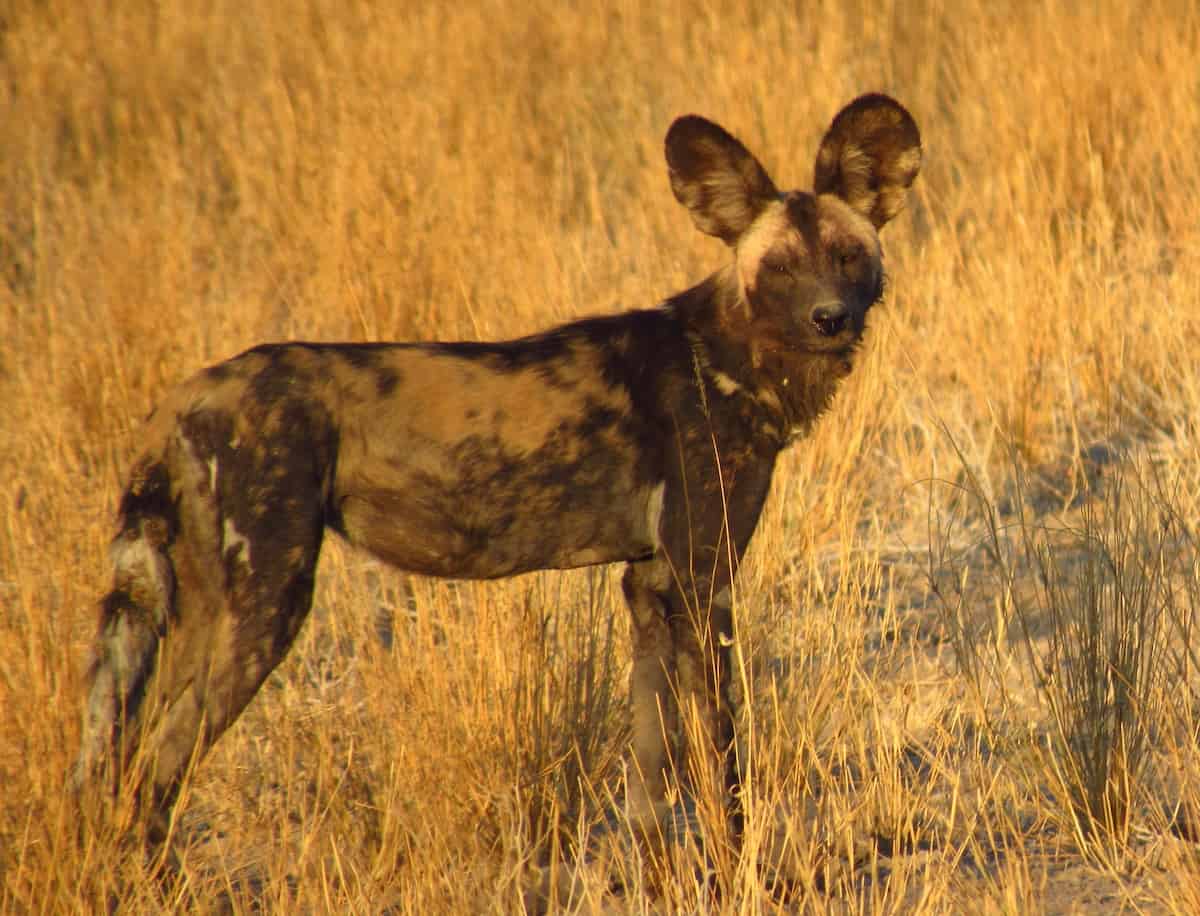
• African wild dogs also have a few names, including Cape hunting dogs and painted dogs. They’re native to parts of Africa south of the Saharan desert.
They’re important to the culture of hunter-gatherers like the San people. However, these animals often find themselves in conflict with humans and are also critically endangered.
🐾 Interesting fact: African wild dogs have the highest hunting success rate of any African animal, at 80%. In contrast, lions have a success rate of only 20%.

2. Pinnipeds, or seals
Seals are actually more closely related to bears than they are to whales or dolphins. Examples of seals in Africa are the endangered Mediterranean Monk seals, along the coast of northwest Africa.
More plentiful are the Cape Fur Seals. These are southern African animals, found no farther north than the southern end of Angola. Colonies exist along the coasts of Namibia and South Africa, as far as Algoa Bay.
Cape Fur Seals can also be found along the coast of Mozambique.

3. Mustelids, aka. a sister group to seals
African Mustelids are also distant cousins of bears. The Mustelid group is a diverse family, including many different African animals.
These animals include striped polecats, several types of weasels and otters, as well as the infamous honey badgers.
🐾 Interesting fact: Red pandas, unlike Giant Pandas, are not bears, they’re mustelids.

How Many Kinds of Bears Are There?
Our world is home to no less than 8 different species of bears:
• the brown bear (Ursus arctos) – known in North America as the grizzly bear. Includes the sub-species Kodiak bear, found in Alaska’s Kodiak Islands.
• the American black bear (Ursus americanus) – endemic to North America. Includes 16 subspecies of various colours that are scattered across Canada, the United States, and Mexico.
• the Asiatic black bear (Ursus thibetanus) – native to Asia. Includes 7 subspecies found across Asia.
• the Giant Panda (Ailuropoda melanoleuca) – endemic to China. Belongs to the family Ursidae, like the other bears in this list, but their genus is Ailuropoda.
• the sun bear (Helarctos malaynus) – found in Southeast Asian tropical forests. Also a member of the Ursidae family.
• the polar bear (Ursus maritimus) – range is primarily within the Arctic Circle, including the Arctic Ocean and all other islands and bodies of water in the area. There are NO polar bears in the Antarctic.
• the sloth bear (Melursis ursinus) – native to the Indian subcontinent. The only Melursis species, it eats termites, ants, and fruit. Belongs to the family Ursidae.
• the spectacled bear (Tremarctos ornatus) – native to the western South American Andes mountains. A member of the Ursidae family.
What Continent Does Not Have Bears?
This info comes from historical information gathered by scientists. We also rely on the fossil records that have been compiled over the years.
What these tell us is that at one time or another, all continents have been home to at least one bear species. All except Australia and Antarctica, that is.
Today Africa and Europe are among the continents that have no bears.
Could Grizzly Bears Live In Africa?
There are a few species of bears that could conceivably survive and even flourish in parts of Africa. These are most likely warm-weather bears such as sun bears or sloth bears.
But they would have to contend with predators such as lions and leopards. Chances are that they would not fare well against them.
However, it’s thought to be possible that grizzly bears could survive in the Atlas Mountains of Morocco. The Atlas bears did, after all.
It has been suggested that, if the human factor was entirely removed and was no longer a danger, grizzly bears could survive. They may even flourish in this climate, with the number of prey animals available to them.
Sadly, humans will always be a danger to the animal kingdom.
Summing It Up – Are There Bears in Africa?
The sad answer is no, there are no bears in Africa. However, the continent is full of amazing wildlife including primates, antelopes, wild cats and many more.
While it’s true that bears don’t call Africa home, there are several relatives of bears that do inhabit parts of the continent. These include cousins such as honey badgers, Cape fur seals, and African wild dogs.
So if you’re looking for a wild adventure, Africa is definitely the place to explore. You won’t find any bears, but you’ll certainly see other fascinating and iconic animals in their natural habitats!
Happy travels!
Read more about animals in Africa:
➢ Is a Rhino a Carnivore? And Other Fascinating Facts About Rhinos
➢ Amazing Ways to Volunteer with Elephants in Africa
➢ How Many Gorillas are Left in the World
➢ 30 African Wildlife Facts You Never Knew
➢ Find Your Dream Destination in Africa
