

The National Animal of Botswana: What It Is and Why
The zebra was adopted as the national animal of Botswana in 1981. Symbolic of Botswana’s commitment to upholding racial harmony, the zebra was chosen as their national emblem.
Representing two colours of the Botswana flag – black and white – the zebra is considered neutral among local tribal symbols. This neutrality symbolizes unity among all tribal backgrounds within the nation.
The zebra also represents strength to the people of Botswana. With their distinct black-and-white striped pattern, they stand out as a symbol of pride in their beautiful country.
The National Animal of Botswana: Coat of Arms
Though the zebra was not adopted as Botswana’s national animal until 1981, they’ve appeared on the country’s coat of arms since its design in 1966.
The one zebra rears on either side of a shield on the emblem. The shape of the shield reflects a traditional shield found in the southern part of Africa.
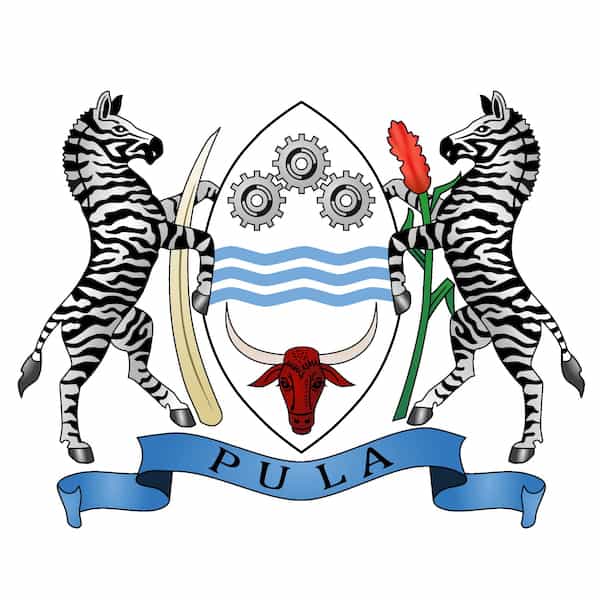
The industry of Botswana is represented by the 3 cogwheels inside the shield. Underneath these is the head of a bull, which emphasizes the importance of cattle in the country.
In between the cogwheels and the bull’s head are 3 wavy lines that indicate water. These lines, together with the banner at the bottom, are reminders of Botswana’s short motto: pula.
Pula has multiple meanings locally. It translates into “rain”, and it also means “good luck”. As well, pula is the name of the currency in Botswana. All three of these, water, luck, and money, are important elements to Botswana.
The left-hand zebra on the coat of arms supports an elephant’s ivory tusk which, together with the two zebras, represents the myriad of wildlife that Botswana is famous for. The tusk is also a reminder of the country’s commitment to the conservation of that wildlife.
The right-hand zebra holds up a stalk of sorghum, an important crop, representing agriculture.
Zebras are also found on Botswana’s 200 pula note, as well as the one thebe coin.

Zebra Facts
Aside from the symbolism, there are also some interesting facts about zebras that make them suitable to be the national animal of Botswana, a strongly united country.
Zebras have strong social bonds and live in groups called “dazzles” for protection. They will also herd together with wildebeests, each type of animal eavesdropping in on the other’s alarms and distress calls when predators are spotted.
Their striped coats provide the ultimate camouflage in tall grasses. In addition, they have excellent eyesight which allows them to detect predators up to three miles away.
A zebra’s striped pattern helps them blend into their surroundings, and provides camouflage from potential predators.
Their stripes are like fingerprints, no two are alike. A zebra mom will isolate herself with a new foal for a few days, so that baby can learn her pattern and her scent.
In Botswana, there is only one species of zebra: the plains, or Burchell’s zebra. The plains zebra can be found in open grasslands and savannahs. They usually live in family groups with a stallion leading the herd.
While the national animal of Botswana can be found in relatively high numbers, plains zebra populations are threatened by loss of habitat, and by hunting.
Other National Symbols of Botswana
The stunning country of Botswana has other symbols that were chosen to represent it to each other and to the world.
Botswana’s National Bird
The Kori Bustard holds the honourable title of Botswana’s national bird.
Historically, the kori Bustard has been known as the “Chief’s Bird”.
They could not be hunted, or their meat eaten, by anyone other than the chief himself or those to whom he gave permission.

They’re Africa’s largest flying bird – the male kori bustard might actually be the heaviest bird alive today that is capable of flight.
A male kori bustard can weigh anywhere from 11 – 19 kg, and stand about 152 cm tall. His wing span can be up to 2.75 metres. The female is usually about half his size.
Though they can fly, they live on the ground and nest in shallow hollows in the dirt. These nests are often built where they can be camouflaged by nearby trees and bushes.
Unfortunately, these enormous birds are undergoing a decline in their population across their ranges. They’ve been listed as near-threatened due to loss of habitat, hunting, and collisions with powerlines.
National Grass of Botswana
Botswana’s national grass is Eragrostis pallens, also known as cane grass, or love grass.
Although the grass is hard to digest and is rarely eaten by livestock, it’s been proven very useful in many ways.
For example, the stems are used to make baskets, as well as a sort of pick to play one-stringed instruments.
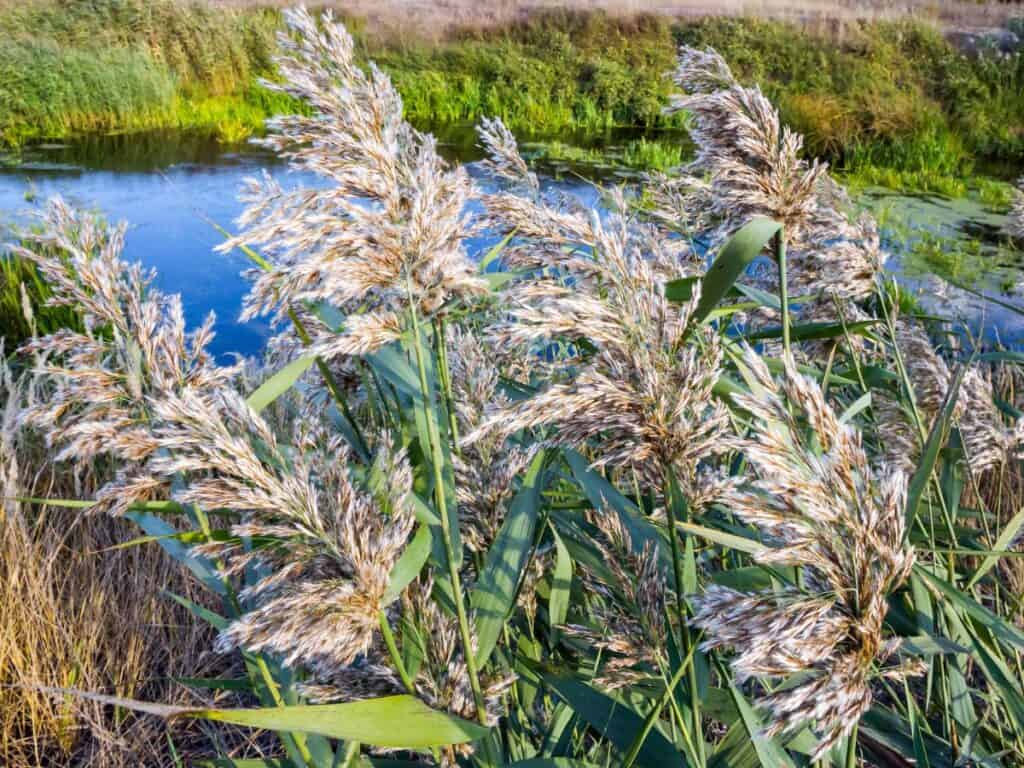
It is also sturdy enough to be used to make broom heads, and as thatching material for the roofs of dwellings and animal shelters.
Botswana’s National Tree
The Marula tree is known by many names. Some include Elephant Tree, Cat Thorn, and Cider Tree.
It is said that the first meeting of the Botswana Democratic Party took place in the shade of a Marula tree.
This prompted its election as Botswana’s National Tree.

The fruit of the tree is a pure favourite of the African elephant.
While they will not get drunk from the fruit, as the myth implies, they will eat the fresh fruit when it’s in season until there is none left.
It’s also used by local women, especially in rural areas, to make a traditional “beer” known as buganu.
Traditionally, the Marula tree was a staple of local diets for people as well. The fruit, of course, could be eaten and used to make buganu. Its skin could be boiled or burnt to make drinks.
As well from the Marula tree people could make rope, a dye for clothing, an oil for cosmetics, and several medications, from an anti-diarrheal to a malaria prophylactic.
The National Flower of Botswana
The Kalahari Devil’s Claw, or sengaparile, was appointed the National Flower of Botswana.
It is called kamangu by many of the tribes of Africa.
Like the people of Botswana themselves, the flowers grow strong against all odds.
They can be found in the least hospitable corners of the country.
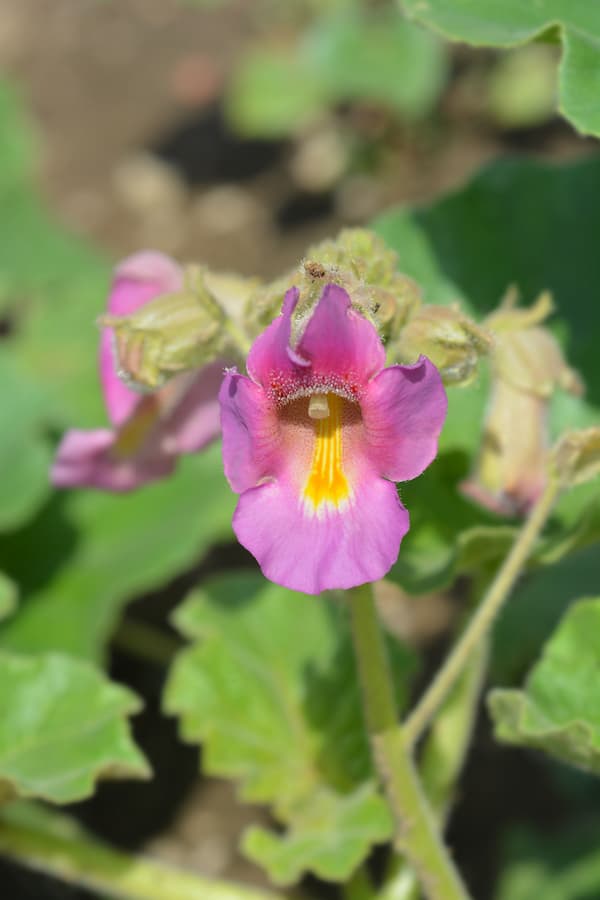
Devil’s Claw is native to the savannah regions of the Kalahari Desert and it got its name from the claw-like hooks that cover the plant’s fruit.
The roots of the plant have been used traditionally for eons as a treatment for various conditions such as stomach upset, joint and other pain, liver and kidney issues, as well as various skin ailments.
It’s the secondary tubers, ie. the smaller roots that grow off the main primary root, that are harvested and used medicinally. In fact, since the 1960s Devil’s Claw has been commercially available as an herbal treatment for conditions such as back pain, rheumatoid arthritis, and osteoarthritis.
Summing It Up: The National Animal of Botswana
The zebra will always be an iconic symbol of Botswana’s vibrant landscape. Its unique striped pattern and strong social bonds are just a few things that make it a beloved national animal.
Botswana’s national symbols are a source of pride for its citizens. To the world, they are reminders of the beautiful and natural world that Botswana strives to preserve.
The Kori bustard and Marula trees serve to represent Botswana’s unique biodiversity. To Botswana’s people, these symbols also stand for their emotional connection with their homeland and the beautiful wildlife that inhabits it.
There is no doubt that Botswana’s national symbols are something to be celebrated!
Happy travels!
More About Botswana:
➵ Photos to Inspire You to Visit Botswana
➵ 17 Fun Facts About The Okavango Delta
➵ The Best Things to Do in Maun 2023
➵ Iconic Animals of Botswana & Where to See Them
➵ Find Your Dream Destination in Africa
